There is no waiting period. Not one day.
The grant of probate is your authority to sell, so you can exchange and complete the moment it lands. We have bought a probate property 48 hours after the grant was issued.
So the literal answer is “immediately”. Which, on its own, is no use to you.
What actually decides your timeline is three things: how much groundwork was done before the grant arrived, which selling route you pick, and a set of clocks that start on the grant issue date and cost the estate money every month.
You can sell the day the grant lands
Nothing in law makes an executor wait. The grant proves your authority to deal with the estate, and that includes exchanging contracts and completing on the house. If there was no will, letters of administration give an administrator exactly the same selling authority.
Here is what “immediately” looked like on one of our purchases.
While probate was still being completed, we surveyed the property, paid for the searches and dealt with all of the enquiries. When probate came through, we purchased within 48 hours.
The grant did not speed that sale up. It removed the last obstacle from a file that was already finished.
For a completion that fast, all of this has to be done before the grant arrives:
- A conveyancer instructed and the title reviewed
- Searches paid for and returned
- Enquiries answered rather than sitting in a queue
- Identity and funding checks cleared on both sides
- The money drawn down the day before, so nothing misses the bank cut-off
That last point is not a detail. We draw funds down the day before completion as standard, and across all our purchases the only time money has missed a same-day cut-off was during a national bank outage.
That pace needs a saleable property and everyone pulling the same way. But it shows that “how long must I wait” is the wrong question.
So why do most probate sales still take months?
Because the grant was never the slow part. In 2026 it is the short stage.
Probate grants averaged around five weeks from submission to issue between January and March 2026, according to Ministry of Justice family court statistics. The ICAEW reported online applications running at roughly 4.3 weeks in June 2026, against about 16 weeks on paper.
Now put the sale next to that. Carbon Law Partners put average residential conveyancing at roughly 120 days from instruction to completion on 2024 data, with local authority searches taking about ten working days, or three to five weeks in busier areas.
So a five-week grant can be followed by four months of conveyancing. Start from cold after the grant and an estate agent sale commonly runs six to nine months.
The single biggest lever on your post-grant timeline is how much conveyancing you got done while you were still waiting for the grant. Title review, the legal pack and problem-spotting need no grant at all.
Choose the conveyancer just as carefully. Use a good local solicitor rather than a large nationwide firm. The nationwide operations are often incredibly slow, and it is luck of the draw which case handler you get. A slow, unresponsive solicitor can kill a deal on its own.
The post-grant delays that actually bite
The stalls I see after a grant are almost never legal. They are paperwork.
Enquiries grind on probate sales because nobody left in the family has the documents: FENSA certificates for the windows, building regulations sign-offs, damp guarantees. Where damp work was done, check whether damp has been raised in the buyer’s survey at all, and when the works were carried out, so you know if the guarantee is still live. No current problem usually means the sale carries on.
Secured debt is the other one. Get the lender’s formal redemption statement early rather than working off the balance showing in a banking app. The gap is typically around £2,000, made up of interest to completion plus any early repayment charge or exit fee.
And if the house is worth less than the debt secured on it, you need the lender’s consent before you can sell at all.
The clocks that start the day the grant is issued
No legal deadline does not mean no cost, and this is the part almost nobody tells executors.
Council tax on an empty estate property is exempt under Class F from the date of death until the grant, and for up to six months after the grant is issued, even if the house is still furnished. The House of Commons Library sets this out in briefing CBP-10651. So the grant date starts a six-month countdown.
- Months 0 to 6 after the grant: nothing to pay
- Months 6 to 12: full council tax, payable by the estate
- From 12 months empty: the long-term empty homes premium can apply. In England that is 100% (double the bill) after a year, 200% after five and 300% after ten; Welsh councils set their own premium, up to 300%
The trap is in that last line. The premium clock runs from when the property became empty, not from when the exemption ended, and the threshold dropped from two years to one on 1 April 2024. An estate can go from paying nothing to paying double.
From 1 April 2025 there are exceptions in England, but they are exceptions to the premium, not to the standard bill. One runs for twelve months from the date probate is granted, and there are others for major repairs and for a property actively marketed for sale. Once the Class F exemption ends the estate still pays standard council tax either way. The exceptions themselves are mandatory, but whether a council charges a premium at all, and at what level, is a local decision, so ring yours and ask.
Council tax is only one line on the bill. Where someone has died you notify the council and the charge stops, though how long the exemption lasts is council dependent. Everything else carries on: utilities, keeping the house heated through winter so damp does not take hold, security checks and unoccupied property insurance. In our experience that runs to around £300 to £400 a month.
Standard buildings cover is also commonly invalidated once a property has stood empty for 30 to 45 days, so a specialist unoccupied policy is not optional.
A seller in the Midlands came to us with an inherited three-bed mid-terrace that had sat empty for eight months, with council tax, insurance, utilities and clearance all stacking up. We exchanged within a week and completed 28 days later, which stopped those costs.
Agent, auction or a direct sale?
With those clocks running, the real choice is price against speed and certainty.
Estate agent. Widest exposure and the best headline price, but the slowest route and the most fragile. Roughly one in five agreed sales still falls through, and they rarely fail early. For an estate paying holding costs, a sale that dies three months in is not a neutral event. Get two or three appraisals before you instruct, because one agent may undercut another on fee, and agree the commission and the tie-in clause before you sign.
Auction. The buyer is committed at the fall of the hammer and traditional conditions give 28 days to complete, so you need the grant in hand before the lot sells. Auctions do fail, though. We bought an inherited London property after the reserve was not met, and completed within four weeks. The seller had paid for the auction legal pack and had nothing to show for that route.
A direct sale to a cash buyer. We buy over 500 properties a year, typically at 75% to 85% of open market value, we cover your legal fees when you use our recommended solicitor, and our contract lets the estate complete anywhere from 14 days to four months after exchange.
Let me say this plainly. Houses that have stood empty a long time usually only reach us after the traditional routes have failed, and about 90% of the sellers who approach us tried the open market first. If nothing is pressing and the estate can carry the costs, an agent will get you more.
Should you do the house up first?
Usually not, and the reason is the estate’s cash rather than the house.
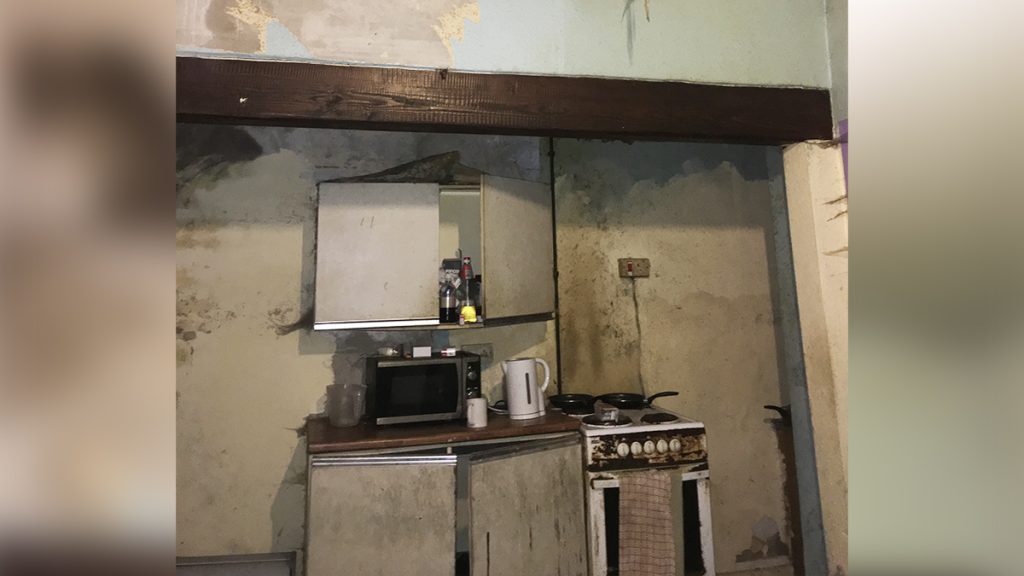
Most of the run-down houses we buy just need clearing out and a light refurbishment to make them liveable. Sellers are rarely in a position to spend £40,000 to £50,000 first, and an estate almost never has that sitting in an account before the sale. Refurbishment often makes a house easier to sell rather than worth more, and every property has a ceiling value for its street and type that you cannot spend past.
One rule for when the buyer’s survey comes back: get your own quote before you concede a penny. A buyer’s quote once put a full rewire at £15,000. A registered electrician we work with quoted £2,000 for the same job, and the reduction was settled on that basis.
Who signs, and what Land Registry needs
Two misconceptions cost people weeks here.
The first is thinking the house must be registered into someone’s name before it can be sold. It does not. Legal title vests in the personal representatives, who hold it on trust for the beneficiaries, and you transfer straight from the estate to the buyer.
The second is not realising that every personal representative named on the grant has to sign the contract and the transfer. One executor cannot sell alone, so if a co-executor is abroad or reluctant, deal with it at the start, not at exchange.
If the property is going to a beneficiary rather than being sold, that is an assent on form AS1, and HM Land Registry needs the grant as evidence of your authority.
Selling above or below the probate value
Whatever price you achieve is measured against the probate valuation, so get that figure right. It should be a RICS Red Book valuation as at the date of death, not an agent’s marketing appraisal.
Sell above it and capital gains tax can arise on the uplift, because the probate figure is the estate’s acquisition cost. Rates are 18% and 24%, with personal representatives now at 24%, and the annual exempt amount is £3,000. Where CGT is due on UK residential property it must be reported and paid within 60 days of completion, not exchange.
Sell below it and there is relief most executors never hear about. Under section 191 of the Inheritance Tax Act 1984 the estate can substitute the sale price for the date-of-death value and reclaim inheritance tax, on form IHT38, provided the sale happens within four years of the death. For a tired inherited house that is the more common outcome.
Either way, write down why you accepted the offer you did. Your duty is to act reasonably, not to squeeze out the highest conceivable price, and a documented decision about holding costs or fall-through risk is defensible.
A fast sale does not mean a fast payout
Completing quickly stops the monthly bleed. It does not release the money.
A claim under the Inheritance (Provision for Family and Dependants) Act 1975 must be brought within six months of the grant, so executors are advised not to distribute before then. Best practice is ten months, because a claimant who issues just before the deadline still has four months to serve.
A notice under section 27 of the Trustee Act 1925 gives unknown creditors a minimum two-month window and protects you personally from claims you had no notice of.
Distribute early and the exposure is yours, not the estate’s. So sell when it suits the estate and let the proceeds sit in the client account. The point of selling fast was never the payout date. It was stopping the costs.
Common questions
Can I market the house before probate is granted?
Yes. List it, hold viewings, agree an offer, let the buyer survey and apply for a mortgage. You simply cannot exchange or complete. Tell the agent and the buyer it is a probate sale, because mortgage buyers are far less patient about waiting than cash buyers.
What if the house was jointly owned?
Held as joint tenants, it passes to the survivor automatically and needs no grant at all. The survivor removes the deceased’s name using form DJP with evidence of death, free of charge. A tenants in common share does form part of the estate.
Can beneficiaries force a sale, or block one?
Generally neither, provided the executor acts within their duties. What they can challenge is a sale at an undervalue, or one that contradicts the will, which is exactly why the reason for your price is worth writing down.
Need to Sell an Inherited Property Quickly?
Get a no-obligation cash offer within 24 hours, with your legal fees covered when you use our recommended solicitor.
This article is general information, not legal or tax advice. Probate, inheritance tax and capital gains tax outcomes depend on your circumstances, so take advice from a solicitor or qualified tax adviser before acting.