You’re thinking about selling your property at auction. Maybe you’ve heard it’s faster than the traditional estate agent route. Maybe someone told you it’s the best way to shift a difficult property.
But here’s what most people don’t ask until it’s too late: how much does it actually cost?
The short answer: Selling through a traditional auction typically costs 3-4% of your sale price. For a £200,000 property, that’s £6,000-£8,000 in fees.
The longer answer: It depends on which type of auction you use, whether your property sells, and what happens if it doesn’t.
Auction costs aren’t always what they seem. There are upfront fees you pay regardless of whether your property sells. There are “optional” extras that quickly become necessary. And there’s a whole layer of risk most sellers don’t consider until they’re already committed.
In this guide, I’ll walk you through every cost involved — the obvious ones, the hidden ones, and the ones that only kick in when things don’t go to plan.
Did You Know?
Property auctions in the UK are big business. In 2024, Allsop LLP alone sold over £1 billion worth of residential and commercial property through its auction rooms. Their September 2024 residential auction — £92.7 million from 371 lots — broke the national record for a single UK residential auction event.
Source: Allsop LLP, 2024/2025
The Main Auction Costs (Traditional Auction)
When most people think “property auction,” they’re picturing the traditional model. An auctioneer with a gavel, and a sale that’s legally binding the moment the hammer falls.
Here’s what you’ll pay.
Auctioneer’s Commission
Most auction houses charge 2-2.5% of the final sale price, plus VAT. That’s the industry standard in 2026.
For a £200,000 property:
- 2% commission = £4,000
- Plus 20% VAT = £800
- Total: £4,800
Some auction houses have minimum fees (£1,500-£2,000), which mainly affects lower-value properties.
The good news? This fee is only payable if your property sells.
The bad news? Everything else gets paid upfront, whether your property sells or not.
Entry/Catalogue Fee
You’ll pay an entry fee of £300-£500 plus VAT before your property even appears in the catalogue.
This covers listing (printed and online), basic marketing, and administration.
Some auction houses offer postponed payment where this fee is rolled into the final bill if your property sells. But most want it upfront.
If your property doesn’t sell? You’ve still paid it.
Legal Pack Preparation
Every property sold at auction needs a legal pack: title deeds, searches, lease details (if leasehold), replies to enquiries, planning documents.
Cost: £200-£400 depending on complexity.
This is non-negotiable. And you pay for it before you know whether your property will sell.
A seller we worked with in London inherited a property and tried auction first. The reserve wasn’t met. They’d already spent £300 on the entry fee and £250 on the legal pack. The property didn’t sell. They were £550 down. We bought it within four weeks. No legal pack needed.
Modern Method of Auction: Who Pays What?
There’s a second type of auction: the Modern Method of Auction. The costs are structured completely differently.
How It Differs
In Modern Method auction, the buyer pays a reservation fee instead of the seller paying commission.
Reservation fee: 2.5-4.5% of purchase price, plus VAT.
For a £200,000 property, the buyer pays £6,000-£10,800. That goes to the auction house, not you.
As the seller, you pay:
- Entry fee: £300-£1,000
- Legal pack: £350-£750
No commission. Sounds brilliant, doesn’t it?
Why It’s Not Actually Binding
Here’s what most people miss.
In a traditional auction, when the hammer falls, the sale is legally binding.
In Modern Method auction, the winning bidder is NOT legally bound to complete.
The reservation fee reserves the property and commits the buyer to “use best endeavours” to exchange contracts within 28 days. But if they change their mind? They walk away, lose the reservation fee, but aren’t forced to buy.
You’re back to square one.
About 95% of sellers who come to us after trying auction say the same thing — the cost of preparing the legal pack and the time it takes was their biggest frustration.
And here’s something most people don’t realise: if your property goes to auction with a low guide price and doesn’t sell, that result is searchable online. It leaves an electronic footprint that can drag down your property’s perceived value going forward.
Important
The Modern Method reservation agreement does NOT constitute exchange of contracts. The buyer is not legally bound to complete — they can walk away (losing the reservation fee). Sellers remain exposed to the risk of the buyer failing to proceed.
Source: iamsold, Property Auction FAQs
Stamp Duty Treatment
One more thing buyers often miss (which indirectly affects you as a seller): the reservation fee counts towards Stamp Duty Land Tax calculation.
If a property sells for £250,000 and the buyer pays a £6,000 reservation fee, HMRC treats the total consideration as £256,000 for SDLT purposes.
That can push buyers into a higher SDLT band. And when buyers realise this, some pull out — which brings you back to re-listing the property.
There’s another wrinkle here. The traditional 28-day completion deadline makes post-auction mortgage applications impractical — most approvals take 3-6 weeks.
Buyers need a mortgage agreement in principle (24 hours to obtain, valid 3 months) before bidding. Without one, they risk losing their deposit if they can’t complete on time. And when buyers can’t complete, you’re the one left dealing with the fallout.
The Hidden Costs Most Sellers Miss
Beyond the upfront fees, there are costs that creep in.
Marketing Upgrades
Basic entry gets you one photo and a brief description. Most auction houses offer premium options: featured placement, professional photography, virtual tours, video walk-throughs.
Cost: £500-£1,500+
Are they necessary? Not technically. But if your property is competing against 200 other lots, a better listing can make the difference.
Pre-Auction Surveys
Some auction houses require or recommend a structural survey before auction. Buyers don’t get the usual survey period — they’re buying “as seen.”
Cost: £400-£1,000
Money you spend before you know if your property will sell.
Holding Costs
From when you decide to sell at auction to when contracts exchange (if they do), you’re still responsible for:
- Council tax
- Buildings insurance
- Utilities
- Security and maintenance
Over 6-8 weeks, that’s £200-£500 per month.
If your property doesn’t sell and you re-list it? Those costs keep mounting.
What Happens If Your Property Doesn’t Sell?
The scenario most sellers don’t want to think about.
When Reserve Isn’t Met
If bidding doesn’t reach your reserve (minimum acceptable price), your property is withdrawn.
You’ve already spent:
- Legal pack: £200-£400
- Entry fee: £300-£500
- Marketing upgrades (if any): £500-£1,500
- Holding costs: £200-£500+
Total: £1,200-£2,900 — and you still own the property.
Withdrawal Fees
If you change your mind before the auction, you may be liable for a withdrawal fee — sometimes the full commission rate you would have paid if the property had sold.
Exceptions exist. You can usually withdraw free after the sole selling rights period expires (21-day notice). Check your contract.
The Electronic Footprint Problem
When a property goes to auction with a low guide price and fails to sell, that result is publicly searchable.
It sets a new reference point for your property’s perceived value. Buyers see it. They use it to justify lower offers.
It’s not just a financial cost — it’s a reputational one for the property.
Re-Listing
You can re-enter your property in a subsequent auction (4-6 weeks later). You may need to pay a new entry fee, update the legal pack, and lower the guide price.
Holding costs continue for another 4-6 weeks.
We regularly speak to sellers after a failed auction. It’s not just the financial cost — it’s the emotional toll.
When your reserve isn’t met and the hammer falls with no sale, it’s genuinely upsetting. That anxiety on top of the money already spent is something a lot of people don’t factor in.
Does It Cost More to Sell at Auction?
Short answer: yes, auction is usually more expensive than an estate agent.
Traditional Auction (£200,000 property):
- Commission: 2.5% + VAT = £6,000
- Entry fee: £400 + VAT = £480
- Legal pack: £300
- Total: £6,780
- Timeline: 28 days from auction to completion
- Risk: Reserve might not be met
Estate Agent (£200,000 property):
- Commission: 1.42% + VAT (HomeOwners Alliance 2025 average) = £3,408
- Legal fees: £300
- Total: £3,708
- Timeline: 120+ days
- Risk: Chain collapse, buyer pull-out
Auction costs roughly 75% more than an estate agent.
The trade-off? Speed. Estate agent = 4+ months. Auction = 10-12 weeks total.
Is that speed worth £3,000 extra? For some sellers, yes. For most? Probably not.
Comparison Table (£200,000 Property)
| Method | Seller Costs | Timeline | Risk |
|---|---|---|---|
| Traditional Auction | £6,780 | 28 days to completion after auction | Reserve not met |
| Modern Method | £1,100 | 28 days reservation + time to exchange | Buyer can walk away |
| Estate Agent | £3,708 | 120+ days | Chain collapse |
| Cash Buyer (Property Rescue) | £0 (we pay legal fees) | 2-4 weeks | None (no chain) |
When Does Auction Make Sense?
Auction isn’t always a bad idea. There are situations where it works well.
Best For:
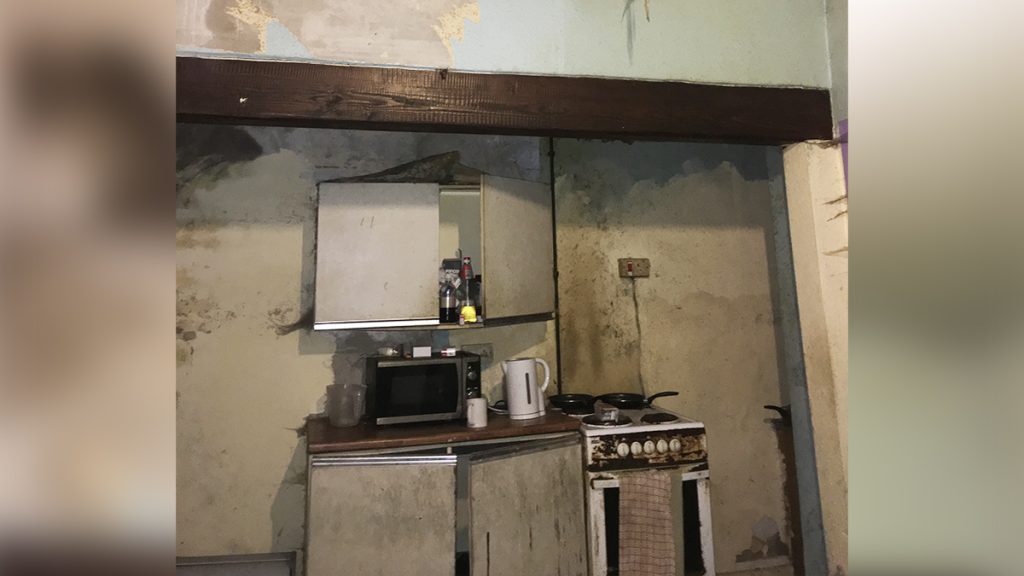
Dilapidated properties where buyers see development potential. Auction attracts investors and developers comfortable with risk.
Unusual properties difficult to mortgage. Non-standard construction, short lease, structural issues — traditional buyers struggle to get finance.
Probate sales where executors want a clean break and defined timeline.
Properties with legal complexities. Title issues, rights of way — auction buyers are often more willing to take them on.
Auctions work brilliantly for properties that need a lot of work — the kind of place where a developer can see the potential.
But for a straightforward three-bed semi in decent condition? The reserve risk is real. If it doesn’t sell, you’ve paid for the legal pack, the guide price is out there for everyone to see, and you’re back to square one.
Not Ideal For:
Straightforward residential properties in good condition. Auction is overkill and expensive.
Sellers who need full market value. Auction properties often sell for 10-20% below open-market value.
Sellers unwilling to risk reserve not being met. If you can’t afford to lose £1,000-£3,000 on a failed auction, don’t risk it.
Based on our experience, auctions are genuinely well-suited to dilapidated properties or those where significant value can be added through works.
For most residential sellers with straightforward freehold properties in stable condition, though, the reserve risk is often underestimated.
Unless you’re comfortable with the financial risk of not selling — and leaving a low guide price and electronic footprint out there — the upfront cost exposure and potential loss of time are difficult to justify.
How to Reduce Auction Costs
If you’ve decided auction is right for you, here’s how to minimise costs.
- Negotiate commission rates. For higher-value properties (£400,000+), auction houses often negotiate down to 1.5-2%. Get quotes from multiple auction houses.
- Pass legal fees to the buyer. Some auction houses allow you to add a clause passing certain costs (including legal fees and searches) to the buyer. More common in Modern Method auctions.
- Choose “no sale, no fee” entry options. Some auction houses let you pay the entry fee only if your property sells. Reduces upfront exposure.
The Fastest, Fee-Free Alternative
Let’s talk about why most residential sellers are better off skipping auction altogether.
Why Property Rescue Is Different
We’re a cash buyer. We’ve been buying property directly from homeowners in England and Wales since 2005.
Zero seller fees. No commission. No entry fee. No legal pack costs. We cover your basic legal fees too. The way we see it, you’ve already accepted a discounted price in exchange for speed and certainty, so the legal costs are factored into our offer. There’s nothing hidden.
Cash offer within 24 hours. Same-day valuation, offer within 24 hours.
Exchange in as little as 48 hours. Once you accept and we’ve completed an independent survey.
Completion in 2-4 weeks. Average 28 days. Fastest ever: 7 days (repossession case).
No risk of reserve not being met. Once we make an offer and the survey is complete, the sale is certain.
No electronic footprint if you change your mind. Pull out before exchange at no cost. No publicly listed failed sale.
Because of our Sale and Rent Back service, we’re one of the only house buying companies in the UK that’s regulated by the FCA (register 522471). Extra protection and accountability.
When Cash Sale Makes Sense
We’re not right for everyone. If you have time and your property is in good condition, you’ll get more money through an estate agent.
But if you’re in these situations, cash sale makes sense:
You need speed and certainty. No chain, no waiting for mortgages, no fall-through risk.
Your property has issues. Structural problems, subsidence, Japanese knotweed, short lease, title issues — we buy properties mortgage lenders won’t touch.
You can’t afford the risk of a failed auction. We remove that risk.
You’ve already had a failed auction. We recently helped a seller in London who’d inherited a property and tried auction first. The reserve wasn’t met. We bought it within four weeks, no legal pack needed.
You’re willing to accept below market value for guaranteed completion. We typically offer 75-85% of open-market value. The trade-off is speed, certainty, and zero fees.
Need to Sell Your Property Quickly?
Get a no-obligation cash offer within 24 hours.
Conclusion: Calculate the True Cost
Here’s what you need to factor in:
Upfront costs (whether property sells or not):
- Entry fee: £300-£500 + VAT
- Legal pack: £200-£400
- Marketing upgrades (optional): £0-£1,500
- Pre-auction survey (if required): £400-£1,000
- Holding costs: £200-£500+
Sale costs (if property sells):
- Commission: 2-2.5% + VAT (£4,800-£6,000 on £200,000 property)
Risk costs (if property doesn’t sell):
- All upfront costs: £700-£3,400+
- Withdrawal fees: potentially full commission rate
- Re-listing costs
- Electronic footprint
- Ongoing holding costs
Key Takeaways
- Total if property sells: £5,500-£8,000+ for £200,000 property (3.5-4%+)
- Total if property doesn’t sell: £700-£3,400+ spent with nothing to show
- Estate agent: £3,700 total, 120+ days, chain risk
- Cash buyer (Property Rescue): £0 fees, 2-4 weeks, no risk
For the right property — dilapidated, unusual, difficult to mortgage — auction makes sense.
For a standard residential property in decent condition? Probably not.
Run the numbers. Factor in the risks. If you’re not comfortable gambling £1,000-£3,000 on a reserve that might not be met, there are better options.
Disclaimer
This guide is for general information only and does not constitute financial, legal, or professional advice. Auction costs vary by auction house, property type, and location. Always obtain personalised quotes from auction houses and seek independent legal advice before committing to any property sale method.
Property Rescue is authorised and regulated by the Financial Conduct Authority (register number 522471) for Sale and Rent Back activities only.
Get a free, no-obligation cash offer from Property Rescue. No fees. No legal pack. No risk. Call 020 8634 0224 or get your free cash offer online.