Let’s be honest. When you find out your estate agent wants to pocket around 1.42% of your sale price including VAT, your first instinct is probably to ask yourself if you actually need them.
On a £250,000 property, that is roughly £3,550 in commission. For a higher-value home or a multi-agency agreement, it could be significantly more. For what, exactly? Uploading a few photos to a property portal and sending some emails?
It is no surprise that more homeowners in England and Wales are asking whether they can just cut out the middleman entirely and sell their house privately.
The short answer? Yes, you can.
But – and this is a big but – selling privately is not as simple as sticking a “For Sale” sign in the window and waiting for the offers to roll in. It requires real effort, a good understanding of the legal process, and a willingness to take on work that most people do not realise is involved.
In this guide, I will walk you through exactly what selling privately involves, step by step, so you can decide whether it is the right route for you. And if by the end you are thinking there has to be an easier way, we will cover that too.
Key Takeaways
- Yes, you can sell privately in England and Wales without an estate agent, but you cannot list directly on Rightmove or Zoopla.
- You will still have costs: EPC (£60–£120), conveyancing (£1,000–£2,000+), portal listing fees (£200–£1,000+), and your own time.
- Pricing correctly matters hugely. Properties priced right from day one are twice as likely to find a buyer.
- Around 29% of sales fell through in 2024. Private sellers face the same risk without professional support.
- A direct cash buyer like Property Rescue offers a faster, fee-free alternative with no chain and no viewings.
The Pros and Cons of Selling Privately
Before you dive in, it is worth being clear-eyed about what you are signing up for. Selling privately has genuine advantages, but it comes with some real drawbacks that catch a lot of people off guard.
The Pros
You save a significant amount of money. No estate agent means no commission. On a typical property in England and Wales, that could be anywhere between £2,000 and £7,500 depending on the sale price and the agent’s fee structure. That is a compelling reason to go it alone.
You are in complete control. You decide when viewings happen, who you speak to, and how you present your home. There is no agent acting as a filter between you and potential buyers. Some sellers actually prefer it that way.
The Cons
You cannot list directly on Rightmove or Zoopla. This catches a lot of people out. Private individuals are not permitted to list directly on the major property portals. Full stop. To get your property on Rightmove, you will need to go through a flat-fee online agent, which costs money and adds another layer of admin.
Limited reach. Without direct portal access, you are relying on Facebook groups, local classifieds, eBay, and word of mouth. That is a dramatically smaller audience.
It is more work than you think. Vetting buyers, hosting viewings around your own schedule, chasing solicitors, and answering queries is essentially a part-time job on top of whatever else you have going on in your life.
Pricing is genuinely tricky. Without professional market knowledge, it is easy to pitch your property too high and sit on the market for months. Or too low, and leave money on the table. Either way, you pay the price.
From the cash buyer’s perspective, overpricing is something we encounter very regularly – particularly with privately listed properties. Over 90% of sellers who approach us say overpricing was a factor in their property sitting on the market. They price based on portal estimates rather than actual comparable sales, and often come to us six to nine months later with a property that has gone stale.
By that point, prospective purchasers can see exactly how long it has been on the market and begin to wonder what is wrong with it – often scrolling past without requesting a viewing.
In the current climate, buyers are extremely price-sensitive. If you do not price correctly from the outset, your property can sit far longer than anticipated.
Did You Know?
Research from Rightmove found that properties priced correctly from day one have a 63% chance of finding a buyer, compared with just 32% for those that require a price reduction. Every subsequent reduction lowers the odds further.
Source: Rightmove, 2021
Sales fall through. A lot. Around 29% of property sales in England and Wales collapsed before completion in 2024, according to data from Quick Move Now. The most common reasons were survey issues, mortgage difficulties, and buyers simply changing their minds. That is nearly one in three sales never reaching the finish line.
The pattern is something that cash buyers see reflected directly in their own enquiries. In our experience, handling around 500 purchases a year, we receive approximately 100 calls a month from homeowners who have been let down by a buyer pulling out – whether due to affordability concerns, a survey down-valuation, or simply a change of mind or circumstance.
Did You Know?
Failed property sales do not just cost individual buyers and sellers. A 2025 report estimated that transaction failures across England and Wales resulted in up to £8.6 billion in lost wider economic impact in 2024, including wasted spending on surveys, legal fees, and removals that never happened.
Source: GOTO Group, 2025
Step-by-Step: How to Sell Your House Privately
Right, so you have weighed it up and you want to give it a go. Here is exactly what the process looks like from start to finish.
Step 1: Get an Accurate Valuation
Do not just guess, and do not rely on what your neighbour reckons their house is worth.
Head to HM Land Registry and look up recent sold prices for comparable properties in your postcode. You are looking for similar size, condition, and street. This gives you a realistic anchor for your asking price rather than wishful thinking.
It is also worth requesting a free valuation from a couple of local estate agents, even if you do not intend to use them. They will give you a market-led figure, and it costs you nothing.
Step 2: Organise Your EPC
This is not optional. Before you can legally market your property in England and Wales, you must have commissioned an Energy Performance Certificate. You can begin marketing once it has been commissioned, but you must use all reasonable efforts to obtain the certificate within 7 days.
An EPC rates your home’s energy efficiency from A to G and costs between £60 and £120 to obtain. You will need to hire an accredited domestic energy assessor. You can check whether you already have a valid certificate (they last 10 years) or find an assessor via the official GOV.UK EPC Register.
Important
Marketing a residential property without a valid EPC can result in a £200 penalty charge. Do not skip this step.
Step 3: Prepare the Property
First impressions count for everything in property.
You do not need to renovate, but you do need to declutter, deep clean, and present your home in its best possible light. Clear the surfaces, tidy the garden, and fix anything obviously broken.
Then comes photography. Poor photos will kill your listing before anyone even reads the description. If you can stretch to a professional photographer (typically £100 to £300), it is well worth it. If you are doing it yourself, shoot in natural daylight, use a wide angle, and avoid cluttered backgrounds.
Step 4: Market Your Property
Here is where private selling gets challenging.
As mentioned, you cannot go directly to the major property portals. Your options are:
- Flat-fee online agents: Several services will list your property on Rightmove for a fixed fee, which can range from a few hundred pounds upwards depending on the package you choose. Do your research on which services are currently operating, as this sector has seen significant shake-ups in recent years.
- Facebook Marketplace and local community groups: Genuinely useful for reaching local buyers, and completely free.
- Local classifieds and community noticeboards: Limited reach, but worth doing.
- Your own network: Do not underestimate word of mouth. Tell everyone.
Did You Know?
Online estate agents’ combined market share fell from around 8% in 2020 to under 5% by mid-2025. The most high-profile casualty was Purplebricks, once valued at £1.3 billion, which was sold for just £1 in 2023. If you are considering a flat-fee online service, check reviews carefully and make sure the company is still actively operating.
Source: IRN Legal, 2024; The Negotiator, 2023
The honest truth is that without major portal visibility, your reach is significantly reduced. Most serious buyers start their search on Rightmove or Zoopla, so limiting yourself to alternative channels means a smaller pool of potential buyers.
Step 5: Conduct Viewings
Once enquiries start coming in, you will need to host viewings yourself.
A few practical tips:
- Always have someone else in the property with you. Never conduct viewings alone with a stranger.
- Prepare a short list of your property’s best features and be ready to talk through them naturally.
- Know your answers to common questions: council tax band, broadband speed, reasons for selling, nearest schools, and the parking situation.
- Be honest about any known issues. Buyers will find out during the survey anyway, and transparency builds trust. You will also be required to answer the TA6 Property Information Form honestly during conveyancing, so there is no benefit in hiding problems.
Step 6: Negotiate and Accept an Offer
When an offer comes in, do not just look at the number.
Ask yourself if this buyer is proceedable. That means:
- Do they have a mortgage in principle from a lender?
- Are they a cash buyer?
- Are they in a chain, and if so, how long is it?
A lower offer from a chain-free cash buyer is often worth more than a higher offer from someone who has not sorted their finances. Chains are where sales fall apart.
For context, those who complete hundreds of cash purchases a year take the view that a cash offer – even at around 80% of market value – often delivers better net value for a seller than a higher financed offer. By the time you factor in estate agent fees, solicitor costs, months of mortgage payments, and the risk of the sale collapsing, the net proceeds on the open market are often only 90-95% of the headline price anyway.
The discount can look significant on paper, but when combined with the certainty of completion, it can considerably reduce risk – and in some circumstances deliver genuine financial freedom, particularly for those facing repossession, an end-of-term mortgage, or a probate situation.
Did You Know?
Chain-free properties in major English cities command an average asking price premium of 3.9% over equivalent properties with a chain. In Bradford, the premium reaches 7.2%. Being chain-free is not just convenient; it is genuinely worth more money.
Source: Zoopla / Home Sale Pack, 2024
Once you are happy, accept the offer. But remember, nothing is legally binding at this stage in England and Wales. Either party can still walk away right up until the exchange of contracts. This is because, under the Law of Property (Miscellaneous Provisions) Act 1989, contracts for the sale of land must be in writing and signed by both parties. For a broader overview of your rights during this phase, Citizens Advice offers excellent impartial guidance on selling a home.
Thinking There Must Be an Easier Way?
Skip the viewings, the portal fees, and the months of waiting. Get a free, no-obligation cash offer from Property Rescue.
Step 7: Instruct a Solicitor
Even in a private sale, you cannot avoid this step.
You will need a conveyancing solicitor to handle the legal transfer of ownership. They will manage the contracts, conduct searches, liaise with the buyer’s solicitor, and ensure the transaction completes correctly. If you are unsure where to start, you can find a regulated professional through The Law Society.
Conveyancing fees typically run between £1,000 and £2,000, depending on the complexity of the sale. While it is technically possible to handle your own conveyancing on a cash sale, it is extremely complex and risky. In practice, the vast majority of property sales in England and Wales use a solicitor or licensed conveyancer, and if there is a mortgage involved your lender will almost certainly require one.
Be aware of anti-money laundering requirements. Your solicitor will need to verify your identity and the source of funds as part of their legal obligations. This is standard practice, not a reflection on you.
Did You Know?
In March 2024, Propertymark reported that only 29% of property transactions in England and Wales reached exchange within 12 weeks of the offer being accepted, down from 78% in 2016. Even with a solicitor working efficiently, the conveyancing process has slowed dramatically over the past decade.
Source: Propertymark, ‘A Dickensian Legal Process’, March 2024
The Hidden Costs of Selling Privately
Here is something that often surprises people. Selling privately does not mean selling for free.
Yes, you are avoiding estate agent commission, but there are still real costs involved, and they add up faster than most people expect.
What You Will Still Pay
| Cost | Typical Range | Notes |
|---|---|---|
| Energy Performance Certificate | £60 – £120 | Legally required before marketing |
| Professional photography | £100 – £300 | Optional, but strongly recommended |
| Flat-fee portal listing | £200 – £1,000+ | Required for Rightmove/Zoopla access |
| Conveyancing solicitor | £1,000 – £2,000+ | Strongly recommended; lender will require one if mortgage involved |
| For Sale board | £20 – £50 | Small but worth factoring in |
| Total (estimated) | £1,500 – £3,500+ | Before counting your own time |
And that last line is easy to overlook, but it matters. Hosting viewings, responding to enquiries, chasing solicitors, and managing negotiations takes hours – sometimes weeks or months of your evenings and weekends.
For some people, that trade-off is absolutely worth it. But it is important to go in with your eyes open. Selling privately is not free. It is just cheaper than using an estate agent, in theory.
Did You Know?
UK estate agents typically charge around 1.18% plus VAT (approximately 1.42% including VAT) for a sole agency agreement. That is substantially lower than many other major markets: France charges around 5.8%, the USA and Italy around 5.5%, and Spain around 5%. While any commission feels like a lot, it is worth keeping the UK figure in perspective when weighing up the DIY route.
Source: iad UK / GetAgent, 2023
Is There a Better Way to Sell Without an Estate Agent?
So let’s take stock of where you are.
You have learned that selling privately can save you money on commission. But you have also seen that it means restricted access to major portals, significant out-of-pocket costs, weeks of your time managing viewings and negotiations, and a very real chance of your buyer pulling out before completion.
That is a lot to take on.
The sellers who contact us after attempting to go it alone are often candid about what caught them off guard. “I did not realise how much time it would take” is among the most common things we hear, along with “I did not realise I would have to conduct my own viewings while working full-time” and “I had no idea the buyer could just walk away after months.”
Many are also unprepared for the complexity of the sales progression itself. Sellers regularly tell us they did not appreciate how important it is to have someone who knows what they are doing managing the process – chasing solicitors, keeping everything on track, and ensuring nothing slips through the cracks.
What sellers consistently tell us they value most about completing with us is straightforward: it is hassle-free. Around 98% say the speed of the process surprised them. We require access to the property only twice. There are no fees, no viewings, and no uncertainty – just a certain cash purchase that can complete significantly faster than the traditional route.
And for many homeowners – particularly those dealing with an urgent situation like a divorce, a probate property, financial pressure, or simply a desperate need to move on – the DIY route just is not realistic.
So here is the question worth asking: what if you could get all the benefits of selling privately, without any of the hassle?
No estate agent fees. No viewings. No marketing. No waiting months for a buyer who might disappear the moment they get a survey back.
This is exactly where a direct cash buyer comes in.
Instead of selling your property through the market – with all the uncertainty and delays that brings – you sell directly to a professional buyer who has the funds ready and no chain attached. The process is private, fast, and simple.
There is no negotiating with strangers at your kitchen table. No agonising over your listing photos. No chasing your solicitor for updates every other day.
It is the private sale, done properly.
Why Choose Property Rescue?
When we say we are a direct cash buyer, we mean exactly that. You are not dealing with an agent, a middleman, or a platform that passes your details on to a list of investors. You are selling your property directly to us.
That distinction matters more than you might think.
No Fees. None.
With Property Rescue, there are no estate agent commissions, no hidden charges, and no nasty surprises at the end of the process. We cover your legal fees too. What we offer you is what you receive. It really is that straightforward.
Speed That Actually Means Something
We know that “fast” gets thrown around a lot in this industry. So let us be specific.
In urgent situations, we can exchange contracts within 48 hours and complete the purchase in as little as 7 days.
For most of our customers, a 28-day completion is the norm. But here is the part that sets us apart: you set the timeline, not us. If you need more time to sort removals, find your next property, or simply get your affairs in order, we work entirely around your schedule.
Speed when you need it. Flexibility when you do not.
Our assessment process is designed to move quickly without cutting corners. When a seller contacts us, we conduct a thorough fact-find and make an initial offer within 24 hours. We then visit the property and consult with local agents before confirming our final offer – a process that can be completed in under a week from first contact. By comparison, a traditional mortgage valuation alone can take two to three weeks, largely because surveyors are heavily backlogged. Our approach means sellers are not left waiting on decisions that should be simple.
No Viewings. No Chains. No Uncertainty.
Forget hosting strangers on a Sunday afternoon. Forget waiting to find out whether your buyer’s mortgage has been approved. Forget the gut-wrenching news that the chain has collapsed three months into the process.
With Property Rescue, there is no chain. We are cash buyers, which means our offer does not depend on selling another property or securing finance. Once we make you an offer and you accept it, and once an independent survey has been completed, the sale goes ahead.
In our experience, handling around 500 purchases a year, we receive approximately 100 calls a month from homeowners who have been let down by a buyer pulling out – whether due to affordability concerns, a survey down-valuation, or simply a change of mind. That 29% fall-through rate we mentioned earlier? It does not apply here.
A case that illustrates this well involved a seller whose buyer withdrew just one week before the scheduled exchange date. The seller had already made an offer on a new build and was well advanced in that process – having been on the market and under offer for over six months, they were desperate not to lose their new home.
We stepped in, made an acceptable offer, and proceeded to exchange within one week and complete 28 days later. The developer’s deadline was met, and our client moved to their dream home.
We Buy Any Property, In Any Condition
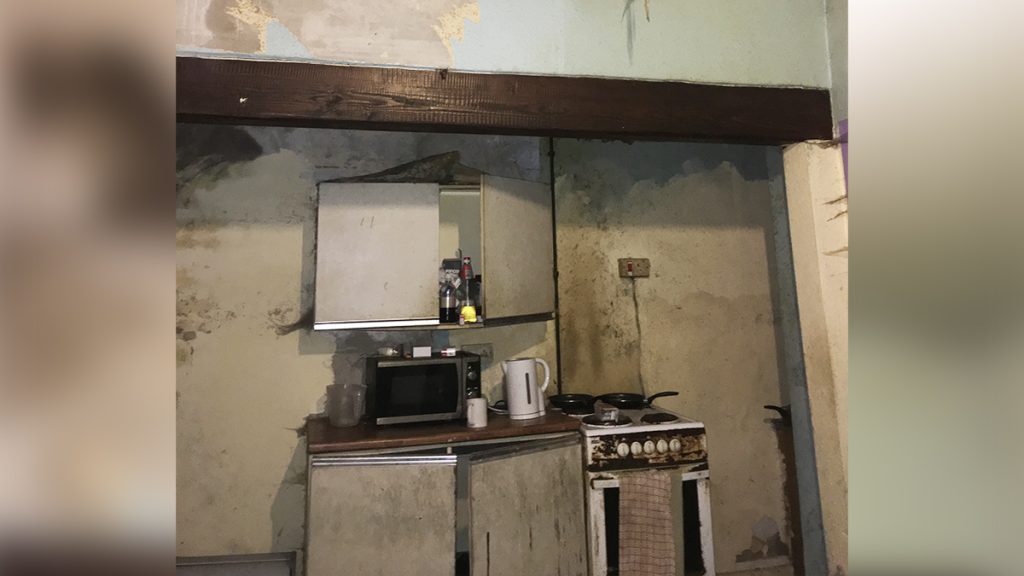
It does not matter if your property needs work. It does not matter if it has been empty for years, if there is structural damage, or if it is in a location that traditional buyers tend to overlook.
We buy any house, in any condition, anywhere in England and Wales. No need to redecorate, repair, or stage anything before we visit.
As a founding member of the National Association of Property Buyers and a member of The Property Ombudsman, we are committed to treating every seller fairly and transparently. With over 20 years of experience helping thousands of homeowners, we have seen every situation and know how to make the process as smooth as possible.
Is Selling Privately Right for You?
Selling your house privately is absolutely possible. For the right person – someone with time, patience, and a willingness to roll their sleeves up – it can save a meaningful amount of money.
But it is not the effortless shortcut it might first appear to be.
Between the restricted access to property portals, the legal requirements, the out-of-pocket costs, the viewings, the negotiations, and the ever-present risk of a sale falling through, the DIY route demands a lot. And it still does not guarantee a fast or certain outcome.
If what you actually want is the core benefit of a private sale – cutting out the estate agent, avoiding hefty fees, and keeping the process simple – then there is a smarter way to get there.
With Property Rescue, you get a genuine private sale: direct, fee-free, and on your terms. No commission, no hidden costs, no chain, and no viewings. Just a straightforward cash offer and a completion timeline that works for you.
Ready to Skip the Stress?
Get a free, no-obligation cash offer for your property today. No viewings, no fees, no chain.
Disclaimer
This article is for general informational purposes only and does not constitute legal, financial, or tax advice. Property transactions involve legal obligations, and you should always seek independent professional advice from a qualified solicitor or licensed conveyancer before proceeding with a sale. Regulations and costs referenced are current as of March 2026 and apply to England and Wales. For impartial guidance on buying and selling property, visit Citizens Advice or GOV.UK.