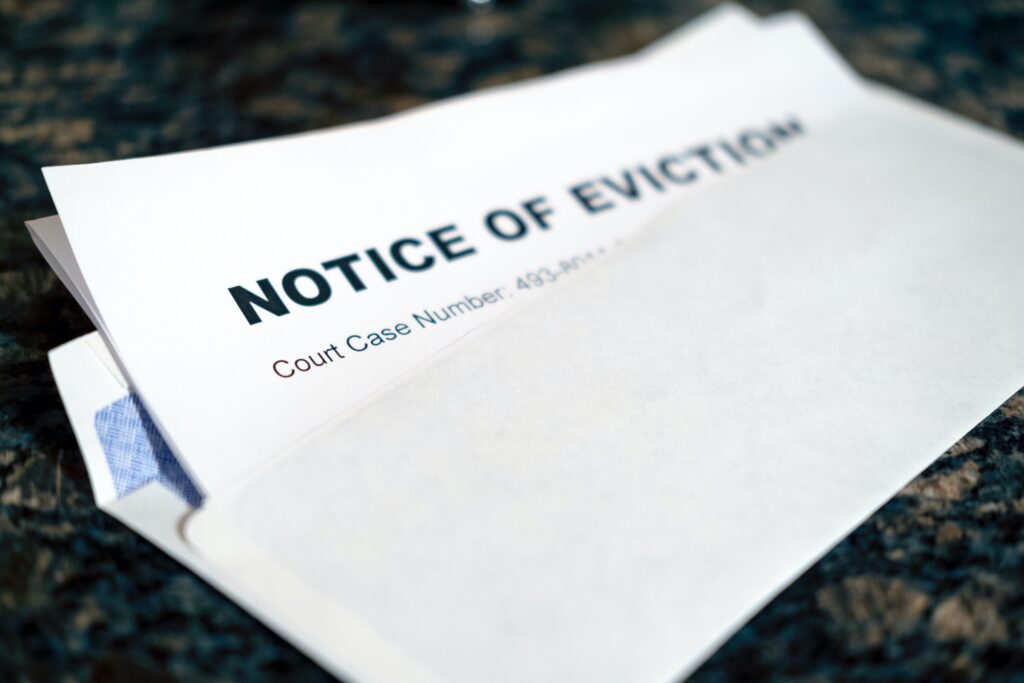
Discovering a “charge” on your property can feel alarming, especially if you’re planning to sell. It might sound like a complex legal hurdle that’ll take months to sort out.
But here’s the thing: it’s actually a common issue with clear solutions.
At Property Rescue, we’ve helped thousands of homeowners navigate property charges over the past two decades. This guide shares what we’ve learned from facilitating these sales every day.
A charge is simply a legal notice registered against your property that secures a debt. The most common example? Your mortgage. Nothing scary about that, is it?
The crucial bit is this: charges must be dealt with before you can sell your property with a clean title. No buyer wants to inherit someone else’s debt, and their solicitor won’t let them even if they did.
In this guide, we’ll walk you through exactly what a property charge is, how to check if you have one, and the steps to remove it. By the end, you’ll know exactly what to do next—whether that’s paying it off, negotiating with creditors, or finding a quick sale solution that handles everything for you.
This guide provides general information based on our experience facilitating property sales. For advice specific to your situation, please consult a solicitor.
What Exactly Is a Charge on a Property?
Let’s cut through the legal jargon.
A charge is a form of security for a debt. Think of it as a formal “IOU” that’s attached to your property. If you sell the property, whoever holds that charge gets paid from the sale proceeds before you see a penny.
A charge gives a lender legal rights over your property until the debt is repaid.
The most common type of charge is your standard mortgage—what’s officially called a “registered charge”. Nothing unusual there. You borrowed money to buy the house, and the lender wants to make sure they get it back.
But mortgages aren’t the only type of charge you might encounter.
Here are the main types of charges on UK properties:
Mortgage (First Charge): This is the loan you used to buy your property. It takes priority over everything else—hence why it’s called the “first charge”. When you sell, your mortgage lender gets paid first.
Second Charge or Secured Loan: These are additional loans you’ve taken out using your property as security. Perhaps you needed money for home improvements or to consolidate debts. They sit behind your mortgage in the queue for payment.
Charging Order: Now, this is where things get interesting. A charging order happens when a creditor (someone you owe money to) goes to court to secure an unsecured debt against your property. That credit card debt or personal loan that wasn’t originally secured against your home? A charging order changes that. According to section 3(4) of the Charging Orders Act 1979, the order takes effect as an equitable charge—meaning it must be paid when you sell.
Equitable Charge: These are less common and usually arise from informal agreements or family disputes. We won’t dwell on these, but they work similarly to other charges.
The key takeaway? All charges must be settled before you can pass clear ownership to a buyer.
How to Check for Charges on Your Property
Right, let’s find out what charges are on your property.
The good news is that this information isn’t hidden away in some dusty filing cabinet. It’s all recorded at HM Land Registry—the official register of property ownership in England and Wales.
The document you need is called the “Title Register”. This is the official proof of who owns your property and what charges are registered against it.
Here’s exactly how to get it:
- Visit the official HM Land Registry search service.
- Search for your property by typing in the address.
- Pay the fee—currently £7 for a digital copy (as of the December 2024 fee update).
- Download your Title Register.
Simple as that. You’ll have the document in minutes.
Now, here’s how to read it:
The Title Register is split into three sections:
- Register (Property Register): This describes your property—the address, whether it’s freehold or leasehold, that sort of thing.
- Register (Proprietorship Register): This shows who owns the property and when they bought it.
- Register (Charges Register): This is the crucial bit. This section lists every registered charge against your property. You’ll see your mortgage here, any secured loans, and—importantly—any charging orders. Each entry shows the date it was registered and who the creditor is.
Found a charge you weren’t expecting? Don’t panic. Let’s look at how to remove it.
Your Step-by-Step Guide to Removing a Property Charge
Now we’re getting to the meat of it.
How you remove a charge depends entirely on what type of charge it is. Let’s break this down by the most common scenarios you’ll face.
Removing a Mortgage or Secured Loan
During a Sale (The Standard Way)
This is how the vast majority of mortgages get cleared.
When you sell your property, your solicitor handles everything. They’ll request what’s called a “redemption statement” from your lender—basically, the exact amount needed to pay off your mortgage on the day of completion.
On completion day, the buyer’s money comes in, your solicitor pays off the mortgage directly, and the lender automatically removes the charge from the register.
You don’t have to do anything except sign where your solicitor points. The whole thing happens behind the scenes.
After Final Payment (Without Selling)
Paid off your mortgage without selling? Congratulations!
Your lender will send a notification to the Land Registry to remove the charge. According to Land Registry Practice Guide 31, this usually happens electronically through something called an “e-DS1”, or occasionally via a paper form called a DS1.
Most lenders do this automatically within a few weeks. If it hasn’t happened after a month, give them a nudge.
Removing a Charging Order
This is where things get a bit more involved.
A charging order is different because it wasn’t part of your original plan. It’s a debt that’s been forced onto your property by a court. But don’t worry—you’ve got options.
It’s worth noting that how a charging order appears on your title depends on the circumstances. According to HM Land Registry’s Practice Guide 76, a charging order may be protected on your title either as a notice (if it charges the legal estate) or as a Form K restriction (if it charges a beneficial interest under a trust). The type of entry affects exactly how your solicitor will apply to remove it, which is why we’d always recommend having a solicitor handle the paperwork.
Option 1: Pay the Debt in Full
The most straightforward approach.
First, contact the creditor listed on your Charges Register. Get the exact settlement figure—make sure it’s in writing.
Once you’ve paid, the creditor must confirm the debt is satisfied. Then your solicitor applies to the Land Registry to remove the entry. The specific form depends on how the charging order was registered—your solicitor will use Form CN1 to cancel a notice, or Form RX3 to cancel a restriction, together with evidence of payment such as a receipt or discharge signed by the creditor. The charge disappears, and you’re free to do what you like with your property.
Option 2: Negotiate a Settlement
Can’t pay the full amount? There’s still hope.
Many creditors will accept a “full and final settlement”—essentially, a reduced payment to clear the debt completely. They’d rather have something than nothing, especially if the debt is old or they think you might struggle to pay. In our experience, settlements of 60–80% of the outstanding balance are not uncommon, though every creditor and situation is different.
MoneyHelper, the government-backed advice service, provides guidance on how to approach these negotiations and what to include in your offer letter.
Get any agreement in writing before you pay a penny. Once settled, the removal process is the same as Option 1.
Option 3: Remove It During a Property Sale
This is by far the most common route for charging orders—and the one we see almost every day.
Just like with a mortgage, the debt gets paid from your sale proceeds. Your solicitor communicates with the creditor, agrees the final figure, and pays them on completion day. The Land Registry then removes the entry from the title.
But here’s the rub: this can complicate things if you’re selling on the open market. Traditional buyers often get nervous when they see a charging order. Their solicitor starts asking questions, the process slows down, and sometimes deals fall through.
Which brings us to an important point…
The Challenge: Selling on the Open Market with a Charge
Let’s be honest about the challenges you might face.
A charging order can make your property look complicated to regular buyers. Even though it’s perfectly legal to sell a property with a charge (as long as it’s paid from the proceeds), many buyers get spooked.
Their solicitor sees the charge and immediately raises a red flag. “What’s this about?” they ask. “Are there other debts? Will this delay completion?”
Suddenly, what should be a straightforward sale becomes a negotiation not just with your buyer, but with your creditor too.
The chain effect is real.
Industry data consistently shows that the average time from listing to completion in England and Wales is around six months or more. According to NAEA Propertymark, the average time to complete on a property stands at around 15 weeks once a buyer is found—and finding that buyer typically takes two months on top. Any delay in sorting out a charge can extend this further and impact the entire property chain. Your buyer might be selling their own place. The people they’re buying from might be doing the same. One hiccup with your charging order, and the whole house of cards can tumble.
Then there’s creditor pressure.
If the creditor who holds the charge is actively pursuing the debt—sending letters, threatening further action—you’re under pressure to sell quickly. But the traditional property market doesn’t do “quickly”.
You’re looking at viewings, negotiations, surveys, mortgage applications… typically five to seven months from listing to completion if everything goes smoothly. And that’s a big “if”.
The biggest risk?
A sale falling through at the last minute. You’ve spent months getting everything lined up, the creditor’s agreed to wait, and then—disaster. The buyer pulls out. Maybe they couldn’t get their mortgage. Maybe they got cold feet.
Now you’re back at square one, with the debt still hanging over you and the creditor’s patience wearing thin.
There is another way.
The Simple Solution: A Guaranteed Cash Sale
When speed and certainty are what you need most, selling to a specialist cash property buyer like Property Rescue provides a clear and effective solution.
Here’s why this works so well for properties with charges.
Speed and certainty, when it matters most. We can provide a cash offer and exchange contracts in as little as 48 hours if needed. There’s no chain to break, no mortgage application that might get rejected, no survey that throws up unexpected issues, and no buyer getting cold feet the night before exchange. We make an offer, we stick to it, and we complete on a date that suits you.
Recently, we helped a homeowner in Birmingham who had a £15,000 charging order from an old business debt. Their traditional sale had already fallen through twice when buyers’ solicitors raised concerns about the charge on the title. We completed the purchase in 18 days, cleared the charging order directly, and they were able to move into rented accommodation while they got back on their feet.
Expert handling of the legal complexities. Our legal team communicates directly with your creditors to arrange for the charge to be settled from the sale proceeds. You don’t have to handle those difficult conversations or worry about whether the creditor will cooperate. In another recent case, a couple in Leeds had both a second charge from a home improvement loan and a charging order from unpaid council tax. We coordinated with both creditors, agreed settlement figures, and completed the sale within four weeks. Both charges were removed on completion day.
No hassle, no stress. No viewings with strangers traipsing through your home. No keeping the house spotless for months on end. No estate agent fees eating into your proceeds. Whether you need to complete in a week or prefer a few months to sort out your next move, we work to your schedule.
Additional Resources and Support
If you’re dealing with debt issues beyond just the property charge, it’s worth knowing that help is available:
- Citizens Advice offers free, confidential advice on managing debts and understanding your rights.
- MoneyHelper provides government-backed guidance on debt solutions and negotiating with creditors.
- StepChange is a debt charity offering free debt advice and management plans.
- The Law Society’s Find a Solicitor can help you locate a property solicitor if you need legal advice specific to your situation.
For those facing more complex financial situations, you might find that selling your house to pay off debts is a viable solution that addresses multiple problems at once.
Take Action Today
Struggling with a charge on your property and need to sell fast?
Property Rescue can provide you with a free, no-obligation cash offer, manage the entire legal process, and clear the debt for you.
We’ve helped thousands of homeowners in similar situations. No judgment, no pressure—just a straightforward solution when you need it most.
Take the first step towards a stress-free sale.
Or if you’re not quite ready for that step, learn more about how we buy any house in any condition, with any complication—including charges.
Call us on 0800 068 7935 to speak with our team today.