Key Takeaways
- Fire-damaged properties can be sold, but your buyer pool shrinks significantly because most mortgage lenders will not finance them
- You are legally required to disclose fire damage on the TA6 Property Information Form during conveyancing
- The two main routes are repair then sell (higher price, slower) or sell as-is (lower price, faster)
- An unrepaired fire-damaged property typically sells for 20–40% below its pre-fire market value, depending on the extent of the damage
- Cash buyers, property auctions, and specialist investors are usually your most realistic options for a fire-damaged sale
A house fire is one of the most stressful things a homeowner can face. Once the immediate danger has passed and everyone is safe, the next question hits hard: what happens to the property?
If you have decided you want to sell rather than rebuild, you are not alone. Plenty of homeowners reach that conclusion, whether because of the cost of repairs, the emotional toll, or simply wanting a fresh start somewhere else.
The good news is that selling a fire-damaged house is absolutely possible. The process just looks different from a standard sale.
In this guide, I will walk you through every step: from what to do immediately after a fire, to your legal obligations, insurance considerations, and the different ways you can sell. I will also cover what your property is likely to be worth and how to get the best outcome from a difficult situation.
Did You Know?
Fire and rescue services attended 25,334 dwelling fires in England alone during the year ending March 2025. That works out at roughly 69 house fires every single day. Dwelling fires have fallen by 19% over the past decade, but they remain one of the most common causes of serious property damage in the UK.
Source: Home Office, Fire Statistics England, April 2024 to March 2025
What to Do Immediately After a House Fire
Before you even think about selling, there are several things you need to take care of first. Getting these right will protect you legally and financially down the line.
1. Make Sure the Property Is Safe
Do not re-enter the building until the fire brigade has confirmed it is safe to do so. Even after the fire is out, there can be hidden structural damage, weakened floors, or toxic residue that makes the property dangerous.
Once you are given the all-clear, arrange for a RICS-qualified structural surveyor to carry out a full assessment. This report will be essential whether you decide to repair or sell. It tells you exactly what you are dealing with and gives future buyers (and their solicitors) confidence in the property’s condition.
2. Contact Your Insurance Provider
Notify your home insurance company as soon as possible. Most policies require you to report a claim promptly, and delays can jeopardise your payout.
Your insurer will typically send a loss adjuster to assess the damage and determine the claim value. Keep hold of every piece of documentation: photographs, receipts for temporary accommodation, correspondence with the fire service, and anything else related to the incident.
Important
Do not start any repairs or clear-up work until your insurer has inspected the property and given the go-ahead. Premature work could void your claim or reduce your payout.
3. Notify Your Mortgage Lender
If you have a mortgage on the property, your lender needs to know. They have a financial interest in the building and will want to be involved in any insurance claim. In some cases, the insurance payout may be sent directly to the lender rather than to you, particularly if the property is deemed a total loss.
Your lender may also need to approve any sale of the property, especially if the fire has pushed you into negative equity.
4. Document Everything
This step is worth emphasising on its own. Take extensive photographs and videos of every room, every wall, every piece of damage. Keep a file of all fire service reports, structural surveys, insurance correspondence, and any quotes for repair work.
This documentation serves two purposes: it supports your insurance claim, and it gives prospective buyers a clear picture of what happened and what needs doing. Transparency builds trust, and trust sells properties.
Your Legal Obligations When Selling a Fire-Damaged Property
There is no way around this: you must disclose fire damage when selling a property in England and Wales. Attempting to hide it is not just unethical. It is illegal.
The TA6 Property Information Form
During conveyancing, your solicitor will ask you to complete the TA6 Property Information Form. This is a standard part of the sales process in England and Wales, and it asks direct questions about the property’s history, including any insurance claims you have made.
You must answer every question truthfully. The TA6 specifically asks about:
- Insurance claims history, including claims for fire, flood, subsidence, or theft
- Current insurance arrangements, including the insurer, policy number, and any special conditions
- Known structural issues or defects
- Any ongoing disputes or claims
What Happens If You Do Not Disclose?
Failing to disclose material information like fire damage can have serious consequences.
Under the Consumer Protection from Unfair Trading Regulations, withholding or misrepresenting material facts is illegal. This applies even years after the sale has completed. A buyer who discovers undisclosed fire damage could take legal action against you.
Under the Misrepresentation Act 1967, for claims of negligent misrepresentation, the burden of proof sits with the seller — you would need to show you had reasonable grounds to believe your answers were true. For allegations of fraud, the burden shifts to the buyer to prove deliberate dishonesty.
Bottom line: full disclosure is not optional. It protects you as much as it protects the buyer.
Important
Even if the fire happened years ago and you have since repaired the property to a high standard, you still need to declare it. The TA6 asks about the property’s entire history, not just its current condition.
Building Regulations and Fire Damage Repairs
If you carry out repairs before selling, all work must comply with the Building Regulations (Part B: Fire Safety). This means obtaining Building Control approval from your local authority or a registered building control approver.
Once the work is finished, you will receive a Building Regulation Compliance Certificate. This document is critical. Buyers and their mortgage lenders will want proof that repairs have been carried out properly and signed off by an independent body.
Without this certificate, you will struggle to sell to anyone requiring a mortgage, even if the repairs themselves are of a high quality.
Repair Then Sell vs. Sell As-Is: Which Route Is Right for You?
This is the biggest decision you will face. Both routes are viable, but they suit very different circumstances.
| Factor | Repair Then Sell | Sell As-Is |
|---|---|---|
| Sale price | Close to full market value | 20–40% below market value |
| Timeline | Months to years | Weeks |
| Upfront cost | £8,000–£100,000+ | None |
| Buyer pool | Mortgage and cash buyers | Cash buyers and investors only |
| Building regs | Full compliance and certification required | Not applicable |
| Stress level | High (managing contractors, inspections, timelines) | Low |
Route 1: Repair the Property and Sell on the Open Market
If your insurance covers the repair costs and you have time on your side, restoring the property before selling is likely to get you the best price.
The advantages:
- You can sell to the full range of buyers, including those who need a mortgage
- The property should sell close to its pre-fire market value (assuming the repairs are done well and properly certified)
- You have full control over the quality of the work
The disadvantages:
- Cost. Fire damage restoration typically costs between £8,000 and £18,000 for moderate damage, but structural repairs to floors, roofs, or load-bearing walls can push costs well above £50,000. In severe cases, total reinstatement can run into six figures.
- Time. Major repairs take months. Between arranging contractors, navigating Building Control inspections, and waiting for compliance certificates, you could be looking at six months to a year or more before the property is ready to list.
- Insurance delays. Even if your policy covers the repairs, insurance payouts are not always quick. Loss adjusters, disputes over valuations, and back-and-forth negotiations can drag on.
This route makes the most sense if you are not in a rush, your insurance is covering the bulk of the work, and you want to maximise your sale price.
Route 2: Sell As-Is Without Repairing
If you need to move on quickly, cannot afford the repairs upfront, or simply do not want to manage a rebuilding project after everything you have been through, selling as-is is a perfectly legitimate option.
The advantages:
- No repair costs, no contractors, no Building Control process
- You can sell within weeks rather than months
- Less stressful overall
The disadvantages:
- You will receive less than market value. How much less depends on the severity of the damage, but 20–40% below the pre-fire value is typical
- Your buyer pool is limited to cash buyers, investors, and developers
- Many high street estate agents will not list a fire-damaged property
Even with a lower sale price, this can be the smarter financial decision if the cost and hassle of repairs would outweigh the extra money you might get. That is especially true if your insurance payout does not fully cover the restoration work.
How Much Is a Fire-Damaged Property Worth?
There is no single formula for this. Every fire is different, and the valuation depends on several factors working together.
Key Factors That Affect Value
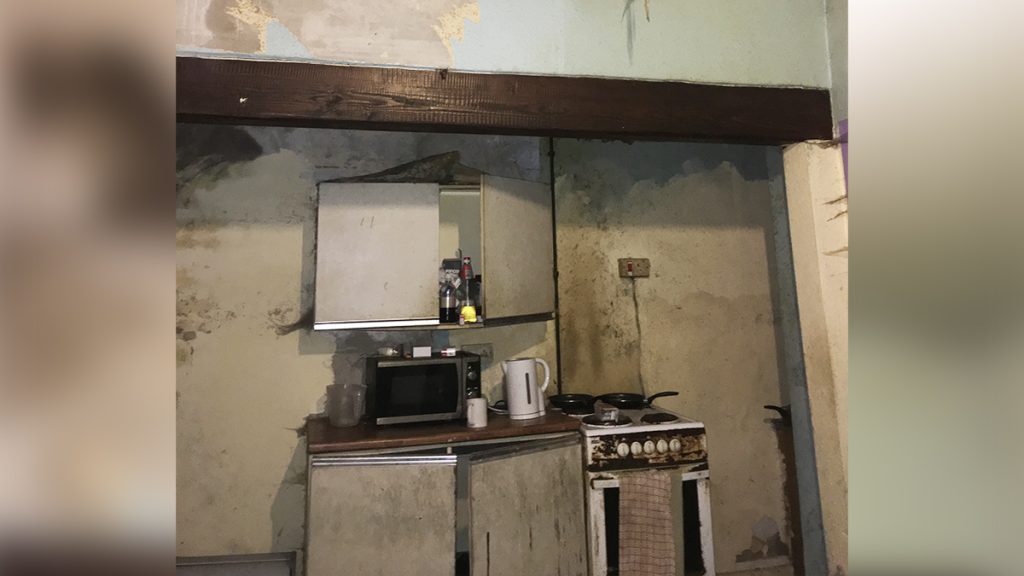
- Extent of the damage. Cosmetic smoke damage in one room is very different from structural failure across half the building. The worse the damage, the bigger the discount.
- Repair costs. The as-is value is essentially: pre-fire market value minus the total cost of repairs, minus a risk/inconvenience discount (typically 10–20%) that buyers factor in for taking on the project.
- Location. A fire-damaged property in a desirable postcode with strong demand will hold its value better than one in a slower market.
- Land value. In extreme cases where the building is a total loss, the property’s value may be reduced to the land value minus demolition costs. In sought-after areas, the land alone can still be worth a significant sum.
- Insurance position. Whether an active insurance claim can be transferred to the buyer (more on this below) can meaningfully affect the price.
Getting a Professional Valuation
A fire-damaged property does not follow the usual valuation formula. You need a RICS-qualified surveyor with experience valuing distressed or damaged properties.
They will assess the structural condition, estimate repair costs, and provide a current market value that reflects both the property’s potential and its problems. This gives you a realistic starting point for pricing.
It is also worth getting two or three quotes from contractors so you (and your buyers) have a clear picture of what the restoration would actually cost.
The Insurance Question: Claims, Payouts, and Selling
Insurance is one of the trickiest parts of selling a fire-damaged property. There are several scenarios, and each one affects the sale differently.
If Your Claim Is Still Open
You can sell a property while an insurance claim is ongoing. However, you need to be upfront with your buyer about the status of the claim, and both sets of solicitors will need to handle the transfer carefully.
In some cases, it is possible to assign the benefit of the insurance claim to the buyer. This means the buyer takes on both the property and the right to the insurance payout, which they then use to fund the repairs. This can make the deal more attractive to investors and developers, because they are effectively buying the property at a discount while also receiving money towards the restoration.
Not all insurers allow this, though. Check your policy terms and get legal advice before assuming this is an option.
If Your Claim Has Been Settled
If you have already received your insurance payout but have not carried out the repairs, you are free to sell the property as-is. The buyer gets the property in its current condition, and you keep the insurance money.
Be aware, though, that your solicitor will need to declare the insurance history on the TA6 form. Buyers will want to know how much the claim was settled for and why repairs were not completed.
If the Property Is Uninsured
If you did not have buildings insurance at the time of the fire (or if the policy did not cover the damage), you are shouldering the full financial impact. This makes selling as-is more likely, because you probably will not have the funds to repair the property first.
Insuring a Fire-Damaged Property for Sale
Here is a catch that surprises many sellers: even while you are trying to sell the property, you still need it insured. Your mortgage lender will require it, and it protects you if further damage occurs before completion.
The problem is that most standard insurers will not cover a fire-damaged property. You will likely need a specialist insurer, and premiums will be significantly higher than normal. This is an ongoing cost you need to factor into your timeline.
Your Options for Selling a Fire-Damaged House
Not every selling method works for a fire-damaged property. Here are the realistic options.
1. Sell to a Cash House Buying Company
This is often the fastest and most straightforward route. Cash buyers purchase properties directly, in whatever condition they happen to be in. There is no chain, no mortgage approval needed, and no risk of the sale falling through because of a down-valuation.
What to expect:
- An offer within days (sometimes hours)
- No requirement to carry out repairs
- Completion in weeks rather than months
- A price below market value, but the trade-off is speed and certainty
What to watch out for: not all cash buying companies are equal. Before you commit, check for:
- Industry membership such as the National Association of Property Buyers (NAPB)
- Regulatory status (are they FCA-regulated?)
- Independent reviews on Trustpilot, Google, and other platforms
- No upfront fees. A legitimate cash buyer should never charge you anything before the sale completes
- Independent legal advice. You should always have your own solicitor, not one chosen by the buyer
2. Sell at Property Auction
Auctions can work well for fire-damaged properties because they attract exactly the right audience: developers, investors, and builders who are comfortable taking on projects.
The advantages of auction:
- Competitive bidding can push the price higher than a private sale to a single buyer
- The sale is legally binding once the hammer falls (the buyer signs contracts and pays a 10% deposit on the day)
- Auctions attract buyers who are specifically looking for properties in need of work
The downsides:
- Auction fees typically run to 2–3% of the sale price, plus marketing costs
- There is no guarantee the property will sell (it may not reach the reserve price)
- You need to have a legal pack prepared in advance, which costs money and takes time
If your property has strong underlying value (good location, decent land, solid foundations), auction is worth serious consideration.
3. Sell Through an Estate Agent
This is the toughest option for a fire-damaged property. Many high street agents will refuse to list it because the limited buyer pool makes it harder for them to earn their commission.
If you do find an agent willing to take it on, expect a longer time on the market and be prepared for low-ball offers. The buyers who come through agents for a property like this are likely to be opportunistic, and negotiations can be drawn out.
That said, if the damage is relatively minor (mostly cosmetic) and the property is otherwise desirable, an estate agent sale is not out of the question. It may just take longer.
4. Sell Directly to a Developer or Investor
If you have contacts in the property world or are willing to market the property yourself, you can approach developers and investors directly. This cuts out intermediary fees, but it requires more legwork on your part.
Be cautious about negotiating directly with experienced property professionals. They know how to value these deals and will push hard on price. Having your own RICS valuation gives you a solid anchor point for negotiations.
Step-by-Step: Selling a Fire-Damaged House As-Is
If you have decided to sell without repairing, here is the process from start to finish.
- Get a structural survey. Commission a RICS-qualified surveyor to assess the full extent of the damage. This report is essential for pricing and for giving buyers confidence.
- Settle or clarify your insurance position. Know exactly where your claim stands. If you can assign the benefit to the buyer, this opens up more options.
- Get a professional valuation. Have the property valued in its current condition by a surveyor experienced with distressed properties.
- Gather your documentation. Compile fire service reports, structural surveys, insurance correspondence, any repair quotes, and the property’s title deeds.
- Choose your sales method. Cash buyer, auction, estate agent, or direct sale. Each has trade-offs in terms of speed, price, and effort.
- Instruct a solicitor. You need conveyancing support regardless of how you sell. Make sure your solicitor understands the specific requirements of selling a fire-damaged property.
- Complete the TA6 form honestly. Declare the fire, the insurance claim, and any known defects. Full transparency from the start prevents problems later.
- Exchange and complete. Once a buyer is found and terms are agreed, your solicitor handles exchange of contracts and completion.
How Property Rescue Can Help
At Property Rescue, we buy properties in any condition, including those with fire damage. We have been doing this for over 20 years, and we buy over 500 properties a year across England and Wales.
Here is how it works: you give us a quick call (takes about 10 minutes) and we will have an indicative cash offer back to you within 24 hours. We then send an independent valuation firm to inspect the property and check with a couple of local estate agents. In 95% of cases, our formal post-survey offer is exactly the same as the initial indicative offer. Only around 5% of the time does a survey reveal something that requires an adjustment.
The whole valuation process takes about five working days, and from there we can exchange in as little as 48 hours. Our average completion time is 28 days from the day we agree a price. The fastest we have ever completed was seven days, for a repossession case in Kent where time really was of the essence.
What you get with a Property Rescue sale:
- A genuine cash offer. No mortgage approvals, no chain, no risk of it falling through
- No repairs needed. We buy fire-damaged properties as they are
- Legal fees covered (when you use our recommended independent solicitor)
- No estate agent fees
- Completion on your timeline, not ours
We are a founding member of the National Association of Property Buyers (NAPB), a member of The Property Ombudsman, and FCA-regulated for our Sale and Rent Back service (FCA Register 522471). We are one of the only house buying companies in the UK with that level of regulation.
I should be honest: a cash sale is not right for everyone. If you have time on your side and your insurance is covering repairs, you may well get more money by restoring the property and selling on the open market. But if you need to move quickly, or the repair process feels overwhelming, we can take the whole thing off your hands.
Need to Sell a Fire-Damaged Property?
Get a no-obligation cash offer within 24 hours. No repairs needed. No fees. No chain.
Common Pitfalls to Avoid
Selling a fire-damaged property is not something most people have done before. Here are the mistakes I see most often.
1. Starting Repairs Before the Insurer Has Inspected
This is the single most costly mistake. If you begin clearing up, demolishing, or rebuilding before the loss adjuster has assessed the damage, you could seriously compromise your claim. Always wait for the green light.
2. Underestimating Repair Costs
Fire damage goes deeper than what you can see. Behind walls, under floors, and in the roof space, the heat, smoke, and water used to fight the fire can cause hidden damage that only emerges once work begins. Always budget for contingencies, and get at least three contractor quotes.
3. Ignoring Smoke and Water Damage
The fire itself is only part of the problem. Smoke permeates fabrics, insulation, and porous surfaces. Water from fire hoses can cause its own structural issues, including damp, mould, and electrical damage. Buyers (and their surveyors) will look at the whole picture, not just the charred bits.
4. Accepting the First Offer Without Shopping Around
Whether you are selling to a cash buyer or at auction, get multiple valuations and offers. Even in a difficult situation, you have options. Do not let urgency push you into a deal that undervalues the property.
5. Skipping Independent Legal Advice
Always instruct your own solicitor. If a buyer offers to cover your legal fees through their recommended firm, that is fine, but make sure the solicitor is truly independent and is acting in your interest. Any reputable buyer will have no problem with this.
Frequently Asked Questions
Can you get a mortgage on a fire-damaged property?
Generally, no. Most mortgage lenders will not lend on a property that has unrepaired fire damage. The property needs to be structurally sound, fully habitable, and properly insured before a lender will consider it. This is why fire-damaged properties are almost always bought by cash buyers, investors, or developers.
If the property has been fully repaired and has a Building Regulation Compliance Certificate, normal mortgage lending can resume.
Do I have to tell buyers about a fire even if I have repaired the damage?
Yes. The TA6 Property Information Form asks about the property’s entire history, including past insurance claims. Even if the damage has been fully repaired and the property looks brand new, you must declare that a fire occurred. Failing to do so could expose you to legal action under the Misrepresentation Act 1967 and the Consumer Protection from Unfair Trading Regulations.
How long does it take to sell a fire-damaged house?
It depends on your route. Selling as-is to a cash buyer can take as little as two to four weeks. Selling at auction typically takes four to eight weeks from instruction to completion. Repairing then selling on the open market could take six months to over a year, depending on the scale of the work and market conditions.
Can I sell the property while my insurance claim is still ongoing?
Yes, you can. You will need to work with your solicitor to manage the claim alongside the sale. In some cases, the benefit of the insurance claim can be assigned to the buyer, but not all policies allow this. Speak to your insurer and your solicitor early in the process.
What if the insurance payout does not cover the full repair cost?
This happens more often than people expect, especially if the property was underinsured. If there is a shortfall, you have three options: fund the difference yourself, sell as-is and accept a lower price, or negotiate with your insurer (potentially with the help of a loss assessor who works for you, not the insurance company).
Will a fire-damaged house sell for more at auction than through a private sale?
It can do. Auctions create competitive bidding between multiple interested parties, which can push the price higher than a negotiated sale with a single buyer. However, auctions also carry fees (typically 2–3% plus marketing costs) and there is no guarantee the property will meet its reserve. The best route depends on the property and your circumstances.
What is a loss assessor and do I need one?
A loss assessor is a professional who works on your behalf to manage your insurance claim and negotiate with the insurance company. They are different from a loss adjuster, who works for the insurer. If your claim is complex or you feel the insurer’s offer is too low, a loss assessor can be worth the fee (they typically charge a percentage of the settlement).
Summary: Your Options at a Glance
- Repair then sell on the open market if you have time, insurance coverage, and want the best price
- Sell as-is to a cash buyer if you need speed, certainty, and minimal hassle
- Sell at auction if you want competitive bidding and have a property with strong underlying value
- Always disclose fire damage on the TA6 form, regardless of which route you choose
- Get a structural survey and professional valuation before making any decisions
- Do not start repairs until your insurer has inspected and approved
Ready to Move On?
We buy fire-damaged properties across England and Wales. No repairs, no fees, no chain. Just a fair cash offer and a completion date that works for you.
Disclaimer
This article is for general informational purposes only and does not constitute legal, financial, or insurance advice. Fire damage, insurance claims, and property transactions involve complex legal and financial considerations that vary depending on individual circumstances.
We strongly recommend consulting the following professionals before making decisions:
- A solicitor for legal advice on disclosure obligations and conveyancing
- A RICS-qualified surveyor for structural assessments and valuations
- Your insurance provider or an independent loss assessor for claims guidance
- A qualified accountant for any tax implications of the sale
Property Rescue is a cash house buying company, not a firm of solicitors, surveyors, or financial advisers. The information in this guide reflects our experience of buying properties in all conditions over more than 20 years, but your situation may require specialist professional advice.