Key Takeaways
- Part exchange lets you trade your existing home as partial payment towards a new-build property from a developer
- Developers typically offer 85–95% of market value for your current home, building in a margin to cover their resale costs and risk
- It removes the need for estate agents, property chains, and open-market uncertainty, but you will almost certainly receive less than full market value
- Your home usually needs to be worth no more than 70% of the new-build price, and must be in a resaleable condition
- Alternatives such as cash house buyers can offer similar speed and certainty without restricting you to new-build properties
You have found the perfect new-build home. The kitchen is immaculate. The energy rating is superb. The developer says you can move in within weeks.
There is just one problem: you still need to sell your current house first.
This is where part exchange comes in. It is essentially a property trade-in. The developer buys your existing home and puts its value towards the cost of your new one.
Sounds simple enough. But like most things in property, the detail matters.
Part exchange can be a genuinely useful route for certain buyers. For others, it can mean giving away tens of thousands of pounds unnecessarily. The difference comes down to understanding exactly how it works, what it costs, and whether there is a better option for your situation.
Let me walk you through everything you need to know.
What Is Part Exchange on a House?
Part exchange is a scheme offered by new-build developers where they agree to purchase your existing property as part of the deal when you buy one of their homes.
Think of it like trading in your old car at a dealership. You hand over your current home, the developer credits its assessed value against the price of the new property, and you pay the difference (usually with a mortgage).
Here is a quick example:
In this scenario, the developer takes your home for £225,000 and you arrange a mortgage (or use savings) to cover the remaining £175,000. The developer then sells your old property on the open market to recoup their money.
Part exchange is only available on new-build properties. You cannot part exchange when buying a second-hand home from a private seller. Most of the UK’s major housebuilders offer some form of part exchange scheme, including Barratt Homes, Taylor Wimpey, Persimmon, Bellway, and many regional developers.
Did You Know?
The NHBC reported that 115,350 new homes were registered to be built in the UK in 2025, an 11% increase on the previous year. With private sector registrations up 12%, part exchange schemes remain a key tool developers use to stimulate demand and keep sales moving.
Source: NHBC (February 2026)
How Does Part Exchange Work? Step by Step
The part exchange process is more structured than a standard property sale. Here is how it typically works:
- Find a new-build development offering part exchange. Not every developer offers it, and not every plot within a development will be eligible. Check directly with the sales team before you start planning.
- Submit your details. The developer will ask about your current property: type, size, location, condition, and approximate value. They will use this to decide whether your home qualifies for their part exchange criteria.
- Independent valuations. If your property passes the initial screening, the developer will instruct at least two independent estate agents to value your home. They will typically ask for a realistic selling price, not an aspirational asking price. This is the figure the agents believe they could achieve within a few weeks of marketing.
- Receive the developer’s offer. Based on the independent valuations, the developer will make you a formal offer for your property. This will usually be below the full market value to account for the developer’s resale costs and holding risk.
- Decide whether to accept. You are under no obligation to accept the part exchange offer. If it feels too low, you can reject it and sell on the open market instead. But if you accept, the deal moves forward quickly.
- Solicitors are instructed. Both transactions (the sale of your old home and the purchase of the new one) are handled simultaneously by your solicitor. This is a single, coordinated process rather than two separate deals.
- Exchange and completion. On completion day, you hand over the keys to your old property and collect the keys to your new home. There is no gap between selling and buying. No temporary accommodation. No storage costs.
The whole process from first enquiry to moving in can take as little as four to eight weeks, compared with the five to six months it typically takes to sell on the open market and buy separately.
Part Exchange Eligibility: Will Your Property Qualify?
Not every property qualifies for part exchange. Developers are selective because they are taking on the cost and risk of reselling your home, and they need confidence they can do it quickly.
Here are the typical eligibility criteria:
Value ratio
Your existing home usually needs to be worth no more than 60–70% of the new-build purchase price. Some developers stretch this to 75% or even 80%, but it varies.
In practical terms: if the new build costs £400,000, your current home should typically be worth no more than £240,000–£280,000. This means part exchange tends to suit people who are moving up the property ladder, not downsizing.
Property type
Most developers accept standard houses and bungalows. Flats are accepted by some, but there are common exclusions:
- Ex-local authority flats are often excluded
- High-rise flats (typically above five storeys) can be difficult, partly due to ongoing Building Safety Act requirements
- Non-standard construction properties (timber frame, steel frame, concrete panel, prefabricated) are usually excluded
- Listed buildings and properties with planning restrictions are typically not accepted
- Houseboats, mobile homes, and park homes will not qualify
Property condition
The developer needs your home to be in a resaleable condition. It does not need to be perfect, but it does need to be structurally sound, with a working kitchen, bathroom, heating system, and electrics.
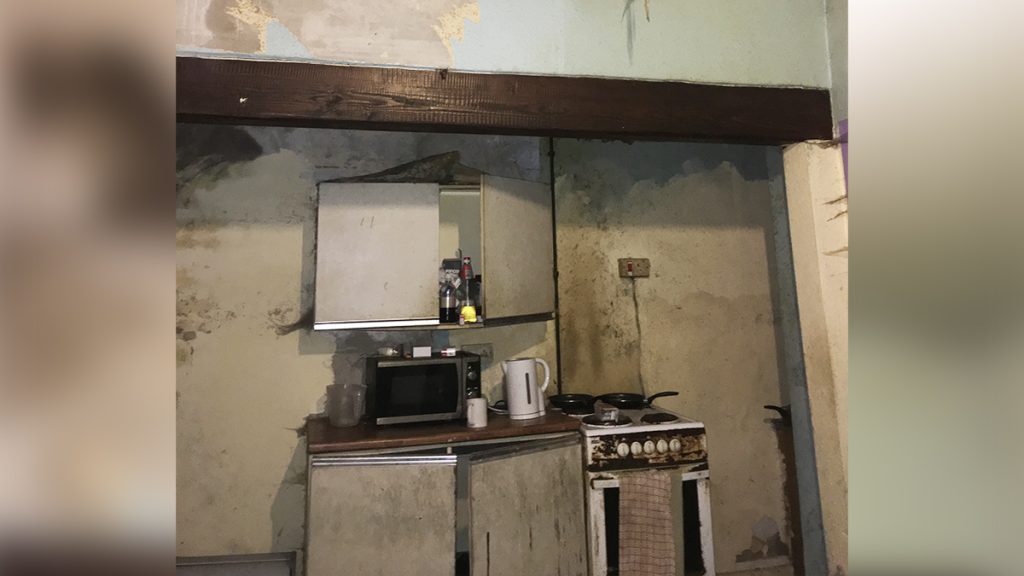
Properties with significant structural defects, subsidence, severe damp, Japanese knotweed, or major repair needs are usually rejected.
Lease length
For leasehold properties, most developers require a minimum of 80 years remaining on the lease. Properties with shorter leases are harder to mortgage and harder to resell, so developers avoid them.
Location
Some developers will only accept properties within a certain distance of the new-build site. Others are more flexible. It depends on how confident the developer is about managing the resale in an area they may not know well.
Important
Every developer sets their own eligibility criteria. What one developer rejects, another might accept. Always check directly with the sales team at the specific development you are interested in before assuming your property will or will not qualify.
How Much Will You Get for Your Property?
This is the question that matters most. And the honest answer is: less than you would get on the open market.
Part exchange offers typically come in at 85–95% of the independently assessed market value. The exact figure depends on the developer, the desirability of your property, and how keen they are to close the sale on the new build.
On a £250,000 property, that discount could range from £12,500 to £37,500.
That is not a trivial amount. So why do developers offer less?
The developer’s costs
When a developer takes your home via part exchange, they take on several costs that you would normally bear as a seller:
- Estate agent fees to sell your old home (typically 1–2% plus VAT)
- Holding costs while the property sits unsold (council tax, insurance, maintenance)
- Risk of price falls if the market dips before they can sell
- Void period where the property generates no income
- Administrative costs of managing the resale process
The developer needs the discount to cover these costs and make a margin. It is a commercial decision, not an attempt to exploit you.
Offsetting the discount
Before you focus solely on the percentage discount, consider what you save by not selling on the open market:
| Cost you avoid with part exchange | Typical amount |
|---|---|
| Estate agent fees (1.5% on £250,000) | £3,750 + VAT |
| EPC certificate | £60–£120 |
| Viewings, staging, and marketing time | Weeks or months of effort |
| Risk of sale falling through | Priceless peace of mind |
When you factor in the estate agent fees alone (£3,750–£4,500 on a £250,000 property), the net cost of part exchange may be smaller than it first appears. Whether it is worth it depends entirely on how you value speed, certainty, and convenience against the price you get for your home.
The Pros and Cons of Part Exchange
Part exchange suits some situations brilliantly and others poorly. Here is an honest breakdown.
Advantages
- Guaranteed buyer. Once the developer accepts your home for part exchange, the sale is guaranteed. No risk of the buyer pulling out, no last-minute renegotiations, and no nervously waiting for a mortgage offer that may never come.
- No property chain. Your transaction is between you and the developer. There is no chain of linked sales that can collapse if one buyer gets cold feet three links up.
- No estate agent fees. The developer buys your home directly. You do not need to instruct an estate agent, which saves you 1–2% of the sale price plus VAT.
- Speed. The process can complete in four to eight weeks, compared with five to six months on the open market.
- One coordinated move. You sell and buy on the same day. No gap, no temporary accommodation, no paying two mortgages at once.
- Less stress. No viewings, no open houses, no marketing your home. The developer handles the resale after you have moved out.
Disadvantages
- Below-market-value offer. This is the trade-off. The speed and certainty come at a price, and that price is typically 5–15% below what you might achieve on the open market.
- Restricted to new builds. Part exchange only works when you are buying from a developer. If you want to buy a Victorian terrace or a period cottage, it is not an option.
- Strict eligibility. Not all properties qualify. If your home has structural issues, a short lease, non-standard construction, or sits above the value threshold, you will be turned away.
- Limited negotiating power. The developer sets the terms. You can accept or reject the offer, but there is very little room for negotiation on the price they offer for your existing home.
- New-build premium. New-build properties themselves often carry a premium over equivalent second-hand homes. You may be paying more for the new home while receiving less for the old one.
Did You Know?
The average time to sell a house on the open market in the UK is now five to six months from listing to completion. For the first time on record, the average time from accepted offer to exchange of contracts has exceeded 100 days. The longer a sale takes, the greater the risk of it falling through.
Source: Estate Agent Today (May 2026)
Part Exchange vs Selling on the Open Market
How does part exchange actually compare with the traditional route? Here is a side-by-side breakdown:
| Factor | Part Exchange | Open Market Sale |
|---|---|---|
| Price achieved | 85–95% of market value | Full market value (if buyer found) |
| Estate agent fees | None | 1–2% + VAT (typically £3,000–£6,000) |
| Timeline | 4–8 weeks | 5–6 months average |
| Chain risk | None | High (34.6% of sales fall through) |
| Viewings required | Developer valuation only | Multiple (evenings, weekends) |
| Certainty of sale | Guaranteed once agreed | Not guaranteed until exchange |
| Property types you can buy | New builds only | Any property |
The right choice depends on your priorities. If you value certainty and speed above all else, part exchange is hard to beat. If getting the best possible price is your top priority and you have time on your side, the open market will almost always deliver more money.
What Happens If Your Property Does Not Qualify for Part Exchange?
Many homeowners fall in love with a new-build property only to discover that their current home does not meet the developer’s part exchange criteria.
Perhaps your home is worth more than 70% of the new build. Perhaps it is a flat that the developer will not accept. Perhaps there is a structural issue or a short lease.
Whatever the reason, being rejected from a part exchange scheme does not mean you are stuck. You have several alternatives.
1. Sell on the open market first
The traditional route. List your property with an estate agent, find a buyer, and use the proceeds to fund your new-build purchase. The downside is time: on average, it takes five to six months, and there is always the risk of the sale falling through.
Some developers will hold a plot for you while you sell, but usually only for a limited period (typically 4–8 weeks). If your sale drags on, you risk losing the new-build altogether.
2. Sell to a cash house buying company
A cash buyer offers many of the same benefits as part exchange: speed, certainty, no chain, and a guaranteed sale. The key difference is that you are not tied to buying a new build. You can sell your home for cash and then buy any property you want.
Cash buyers typically offer 75–85% of market value, so the discount may be slightly larger than part exchange. But the flexibility is significantly greater, and serious cash buyers can often move faster than developers.
3. Property auction
Selling at auction gives you a binding sale on the day the hammer falls. It is chain-free and usually completes within 28 days. However, auction prices can be unpredictable, and not all properties are suited to this route.
4. Assisted sale or hybrid route
Some companies offer an assisted sale, where they help you achieve closer to market value but with a longer timeline than a straight cash purchase. This can work well if you do not need to move immediately but want more certainty than the open market provides.
When Part Exchange Makes the Most Sense
Part exchange is not the right choice for everyone. But it can be the perfect solution in certain situations:
- You have already found your dream new build and cannot risk losing it while your current home sells on the open market
- You have been let down by a buyer before and want the certainty of a guaranteed sale this time around
- You need to relocate quickly for work, family, or personal reasons and cannot afford months of uncertainty
- Your property is in a slow-moving market where finding a buyer could take many months
- The stress of selling is a genuine concern and you would rather accept a lower price for a simpler, smoother process
On the other hand, part exchange is probably not right for you if:
- You are not buying a new build
- Your property is worth more than the developer’s value threshold
- You have time and are not under pressure to sell quickly
- Maximising the price you get for your home is your top priority
What If Your Buyer Pulls Out and You Have Already Committed to a New Build?
This is one of the most stressful situations a homeowner can face. You have accepted an offer. You have found your new home. You have mentally moved in. And then your buyer pulls out.
If you are buying a new build, the pressure is even greater. Developers will not hold a plot indefinitely. If you cannot demonstrate that you can complete within their timeframe, they will sell it to someone else.
This is exactly the kind of situation where a cash buyer can step in and rescue the chain.
We had a seller come to us who had been under offer for over six months. Their buyer pulled out a week before exchange, and they had already offered on a new-build property that the developer was ready to exchange on. We stepped in, exchanged within a week, and completed 28 days later. They got their new home.
It does not always work out that neatly. Every case is different. But the point is that a collapsed chain does not have to mean a collapsed move.
From Our Experience
Property Rescue receives around 100 enquiries every month from sellers whose buyer has pulled out. In most cases, we can make a cash offer within 24 hours and exchange in as little as 48 hours if needed. That kind of speed is often enough to save an onward purchase that would otherwise fall apart.
Part Exchange FAQs
Can you part exchange a flat?
It depends on the developer. Some accept standard flats with adequate lease lengths (80+ years remaining), but many exclude ex-local authority flats, high-rise properties, and leasehold flats with short leases. Always check with the specific developer.
Do you pay stamp duty on a part exchange?
Yes. Stamp duty (SDLT in England, LTT in Wales) is calculated on the full purchase price of the new-build property, not on the difference between the two values. The part exchange element does not reduce your stamp duty liability.
Can you negotiate a part exchange offer?
You can try, but developers typically have limited flexibility. The offer is based on independent valuations, and the developer’s margin is already factored in. You may have more success negotiating on the new-build price, upgrades, or included extras rather than the part exchange valuation.
How long does part exchange take?
From initial enquiry to moving in, the process usually takes four to eight weeks. This is significantly faster than selling and buying on the open market, which averages five to six months.
Is part exchange the same as a house swap?
No. A house swap (or home swap) is an informal arrangement between two private homeowners who agree to exchange properties, sometimes with one party paying the other a balancing sum. Part exchange is a formal scheme operated by a property developer. They are very different processes with different legal and financial implications.
Can you do part exchange if you have a mortgage?
Yes. Most homeowners who use part exchange have a mortgage on their current property. The mortgage is paid off from the part exchange proceeds as part of the conveyancing process, just as it would be in a normal sale.
What if the developer offers less than my mortgage balance?
If you are in negative equity (your property is worth less than you owe on the mortgage), part exchange will not work unless you can make up the shortfall from savings. The mortgage must be cleared in full for the sale to complete.
Do all new-build developers offer part exchange?
No. Part exchange is most commonly offered by larger developers such as Barratt Homes, Taylor Wimpey, Persimmon, and Bellway. Smaller regional developers may also offer it, but it is less common. Some developers use third-party part exchange providers to manage the process on their behalf.
Alternatives to Part Exchange: Your Other Options
If part exchange is not available, not suitable, or the offer is too low, consider these alternatives:
| Alternative | Speed | Typical price achieved | Best for |
|---|---|---|---|
| Open market (estate agent) | 5–6 months | Full market value | Sellers with time |
| Cash house buyer | 2–4 weeks | 75–85% of market value | Speed, certainty, any property type |
| Property auction | 28 days post-hammer | Varies widely | Unique or hard-to-sell properties |
| Part exchange with developer | 4–8 weeks | 85–95% of market value | New-build buyers wanting certainty |
Each route has trade-offs. There is no single “best” way to sell a house. The right answer depends on your timeline, your financial position, and what matters most to you.
Tips for Getting the Best Part Exchange Deal
If you decide part exchange is the right route, here are some practical steps to improve your outcome:
- Get your own valuation first. Before the developer’s agents visit, instruct an independent estate agent to value your home. This gives you a baseline to compare against the developer’s offer.
- Present your home well. The independent agents will value your home based on its current condition. A clean, tidy, well-presented property will attract a higher valuation. This is not the time to let the garden grow wild.
- Negotiate the new-build price, not just the PX offer. Developers often have more flexibility on the new-build price, included upgrades, or extras (carpets, appliances, landscaping) than on the part exchange valuation.
- Ask about incentives. Many developers offer additional incentives alongside part exchange, such as covering your stamp duty, paying legal fees, or including furniture packages. Ask what is available.
- Check whether a funded PX provider is involved. Some developers use third-party “funded PX” companies. These companies purchase your home on behalf of the developer. The process is similar, but it is worth understanding who is actually buying your property and on what terms.
- Compare the total deal, not just the PX offer. A slightly lower part exchange offer combined with a discount on the new build and free upgrades may be better overall than a higher PX offer with no extras.
Need to Sell Quickly but Not Buying a New Build?
Part exchange is a useful tool, but it only works if you are buying from a developer. If you need to sell quickly for any other reason, whether that is a broken chain, financial pressure, relocation, or a property that is proving hard to sell on the open market, there are other options.
At Property Rescue, we buy houses directly for cash, whatever the condition or reason for sale. We have been doing it for over 20 years. We make offers within 24 hours, exchange in as little as 48 hours, and typically complete in 2–4 weeks.
We cover your legal fees when you use our recommended solicitor (an independent, established firm, not in-house), and once we make a formal offer after our independent survey, that offer is guaranteed. No renegotiations. No pulling out.
It is not right for everyone. If you have time and are not under pressure, the open market will almost always get you more. I will be the first to tell you that. But if speed and certainty are what you need, it is worth knowing the option exists.
Need to Sell Your Property Quickly?
Get a no-obligation cash offer within 24 hours. No chain. No estate agent fees. No risk of the sale falling through.
Disclaimer
This article is for general information only and does not constitute legal, financial, or tax advice. Part exchange terms, eligibility criteria, and valuations vary between developers and are subject to change. Property Rescue is not a new-build developer and does not offer part exchange. Property Rescue buys property for cash across England and Wales. Because of our Sale and Rent Back service, we are one of the only house buying companies in the UK regulated by the FCA (FCA Register 522471). If you need advice about stamp duty, mortgages, or the legal aspects of a property transaction, please consult a qualified solicitor or FCA-regulated financial adviser. Information is current as of May 2026 but property law and market conditions change regularly.
Get a free, no-obligation cash offer from Property Rescue. No fees. No legal pack. No risk. Call 020 8634 0224 or get your free cash offer online.