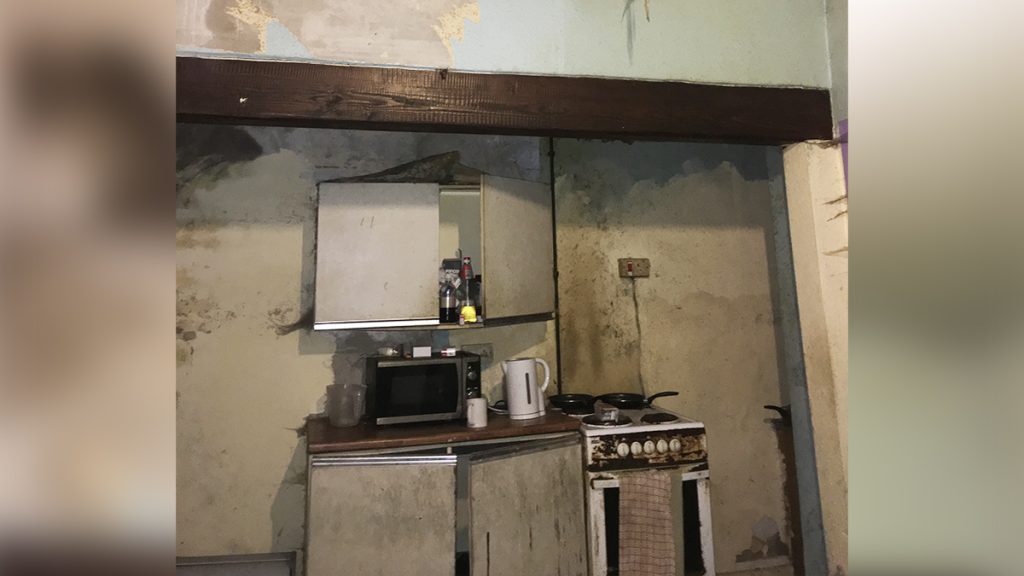
That flicker of the lights you’ve been ignoring, the old-fashioned fuse box under the stairs, or an electrician’s sharp intake of breath – these are often the first signs that your home needs a major electrical overhaul: a full rewire.
Let’s be honest.
A rewire is one of the most expensive and disruptive home improvement jobs you can face.
And right now, you’re probably asking yourself the same question everyone asks: “What on earth is this going to cost me?”
We get it. Finding out your home needs rewiring feels overwhelming. The costs, the mess, the time – it’s enough to make anyone’s head spin.
In this guide, we’ll walk you through everything you need to know: the telltale signs you need a rewire, the real costs involved across the UK market, what the job actually entails, and a practical alternative for those who want to sell their house fast and avoid the hassle altogether.
Please note: While cost guidance in this article applies broadly across the UK, the legal and regulatory sections on Building Regulations, certificates, and landlord requirements are specific to England and Wales. Scotland and Northern Ireland have different frameworks.
Key Signs Your House Needs Rewiring
Before we dive into costs, let’s confirm whether you actually need a rewire. After all, there’s no point worrying about something that might not even be necessary.
Here are the red flags that suggest your home’s electrical system needs urgent attention:
Old or Outdated Fuse Box
Take a look at your consumer unit (that’s the modern term for a fuse box). Does it have cast-iron switches or big, white ceramic fuses you have to replace?
If you’re still working with these relics, you’re overdue for an upgrade.
Modern consumer units with miniature circuit breakers (MCBs) and residual current devices (RCDs) aren’t just convenient – they’re essential for safety. Under the 18th Edition of BS 7671 wiring regulations, all new electrical work in England and Wales must comply with current standards, which require RCD protection for most circuits (Electrical Safety First, 2026).
Old-Fashioned Sockets & Switches
Round-pin sockets. Brown, brittle Bakelite switches. Sockets mounted directly on the skirting boards.
These aren’t just dated – they’re a sign of an old wiring system. If your home still has these vintage features, it’s a clear indicator the wiring behind them is equally antiquated and likely unsafe.
Not Enough Sockets
Modern life requires power. Lots of it.
If you’re constantly juggling extension leads and multi-plug adaptors, your electrical system wasn’t designed for today’s demands. And overloading old circuits? That’s a serious fire risk waiting to happen.
Flickering or Dimming Lights
It might seem like a minor annoyance, but lights that flicker or dim when you use another appliance often indicate loose, faulty, or overloaded wiring.
Don’t ignore it.
Burning Smells or Scorch Marks
This is a serious danger sign. If you notice a faint fishy or burning smell, or see scorch marks around sockets or switches, stop using them immediately and call a qualified electrician.
This isn’t a “wait and see” situation.
The Age of the Property
Here’s a simple rule of thumb: if your wiring hasn’t been checked in over 10 years, or the house was built before the mid-1980s and has never been updated, it’s highly likely to need work.
Electrical standards have changed dramatically over the decades. What was acceptable in 1970 simply doesn’t meet today’s safety regulations.
But here’s what many homeowners don’t know: you might not need a full rewire.
Before committing to the cost and disruption of a complete rewire, it’s worth getting an Electrical Installation Condition Report (EICR) from a registered electrician. This inspection (typically costing £150-£300) assesses your installation’s safety and can reveal whether targeted upgrades to specific circuits might be sufficient – potentially saving thousands compared to a full rewire (Checkatrade, 2026).
The Average Cost to Rewire a House in the UK (2026 Estimates)
Right, let’s talk numbers.
On average, a full rewire in the UK can cost anywhere from £3,500 to over £9,000, depending on the size and location of your property (MyJobQuote, 2026).
But that’s just the headline figure. Let me break it down properly for you.
Cost by Property Size
Here’s what you can expect to pay for the electrical work, based on your property type (Checkatrade, 2026):
| Property Type | Typical Cost Range |
|---|---|
| 2-Bedroom Terrace | £3,500 – £5,500 |
| 3-Bedroom Semi-Detached | £4,500 – £7,000 |
| 4-Bedroom Detached | £6,500 – £9,000+ |
| 5-Bedroom+ Detached | £8,000 – £12,000+ |
These are averages, mind you. Your actual quote could vary significantly.
Factors That Push Costs Up
Several factors can send your rewiring bill soaring:
Location matters.
If you’re in London or the South East, add at least 20-30% to those estimates. Labour costs in these areas are significantly higher than the national average (MyBuilder, 2026).
Property layout plays a role.
A sprawling bungalow might cost more than a compact two-storey house with the same number of rooms. More floor area means more cable, more sockets, and more labour.
Accessibility is crucial.
Got solid stone walls? That’s going to cost more than working with modern plasterboard. Chasing cables (cutting channels) into hard walls is a much bigger job.
Your specification choices add up.
Want designer chrome sockets? USB charging points in every room? Smart lighting systems? These upgrades can quickly inflate the final bill.
The Hidden Costs Nobody Mentions
Here’s where it gets painful.
The electrician’s bill is just the beginning.
Plastering repairs will set you back another £200-£400 per room (HomeOwnerCosts, 2026). Those channels chased into your walls for the new cables? They don’t magically repair themselves.
Redecorating is unavoidable. We’re talking £300-£600+ per room for painting and wallpapering.
Your entire house will likely need refreshing after the work’s done.
Alternative accommodation might be necessary. Many people can’t live in a house whilst it’s being rewired. A week in a hotel or rental? That’s another chunk of change you hadn’t budgeted for.
Suddenly, that £5,000 rewire has ballooned to £10,000 or more.
Did You Know?
Home improvement costs can spiral quickly when you factor in associated work. Across the UK property market, average conveyancing fees for buyers rose by 18.7% in just one year, from approximately £1,319 in 2023 to £1,567 in 2024 – significantly outpacing general CPI inflation.
The same cost pressures affect trades like electricians and plasterers. When budgeting for a rewire, always add at least 20-30% contingency for unexpected additional costs.
Understanding Building Regulations and Certification
Here’s something crucial that many homeowners miss:
Electrical rewiring is notifiable work under Part P of the Building Regulations in England and Wales. This means it must either be carried out by a registered electrician who can self-certify the work, or inspected and certified by Building Control (gov.uk, Building Regulations).
Who Can Do the Work?
Only use electricians registered with a competent person scheme such as:
- NICEIC (National Inspection Council for Electrical Installation Contracting)
- NAPIT (National Association of Professional Inspectors and Testers)
These schemes allow qualified electricians to self-certify their work as compliant with Building Regulations and BS 7671. Alternatively, non-registered electricians can complete notifiable work if it’s inspected and approved through your local authority Building Control (gov.uk, Competent Person Schemes).
What Certificates Should You Expect?
After a full rewire, you should receive an Electrical Installation Certificate (EIC) (with schedules of inspection and test results) that confirms the work complied with BS 7671 standards at the time it was designed, constructed, inspected, and tested. For notifiable work, you should also receive Building Regulations compliance confirmation. The EIC will include a recommended date for the next inspection – typically 10 years for an owner-occupied domestic property, or 5 years for a rented property. It’s important to note that the EIC itself does not expire; it is a declaration of initial safety at the time of installation (IET, BS 7671 Model Forms; London Safety Certificate, Domestic EICR Frequency).
Don’t confuse this with an EICR:
- EIC (Electrical Installation Certificate) = issued after NEW work or a complete rewire
- EICR (Electrical Installation Condition Report) = periodic inspection of EXISTING installations to check safety
If you’re a landlord in England or Wales, you’re legally required to have an EICR conducted every 5 years. In England, the Electrical Safety Standards in the Private Rented Sector (England) Regulations 2020 came into force on 1 June 2020, applied to new specified tenancies from 1 July 2020, and to existing specified tenancies from 1 April 2021 (subject to statutory exclusions). In Wales, the Renting Homes (Fitness for Human Habitation) (Wales) Regulations 2022 require landlords to ensure electrical inspections every 5 years, with the duty applying from 1 December 2022 for new occupation contracts (gov.uk, Electrical Safety Standards; gov.wales, Fitness for Human Habitation).
Insurance Implications
One thing people often overlook: some insurers won’t cover properties with outdated electrical systems, or they may require an up-to-date EICR as a condition of cover. If you’re selling or insuring a property with old wiring, it’s worth checking this first.
The Rewiring Process: Disruption is Guaranteed
Now, let’s talk about what you’re actually signing up for when you commit to a rewire.
Spoiler alert: it’s not pretty.
The Timeline
A typical 3-bed house takes 5-10 working days for the electrical work alone (MyJobQuote, 2026). That’s if the sparky isn’t off on other jobs every other day.
Important note: “working days” doesn’t mean consecutive days. With scheduling, material deliveries, and coordination with plasterers, the entire project can easily stretch over 2-3 weeks.
Add another week for plastering to dry. Another few days for decorating. Before you know it, you’re looking at three to four weeks of chaos.
And that’s if everything goes smoothly.
The Reality of Living Through a Rewire
Picture this.
Floorboards in your home lifted. Deep channels carved into your walls. Dust absolutely everywhere – and I mean everywhere.
In your clothes, your hair, your morning cuppa. And you’ll be lucky if you can even enjoy a morning cuppa since the electricity may be switched off while they work.
It’s not a tidy job. It can’t be.
Your electrician needs to access every corner of your property. That means furniture moved, carpets lifted, and your daily routine completely upended.
The Four Stages of a Rewire
Let me walk you through what actually happens:
First Fix:
This is the most disruptive phase. Old wiring gets ripped out. Walls get chased. New cables are run throughout the property. Your home will look like a building site because, well, it is one.
Plastering:
Once the cables are in, a plasterer comes to repair all those channels in your walls. More dust. More mess. And you can’t touch anything until it’s properly dried.
Second Fix:
The electrician returns to connect everything up. Sockets, switches, light fittings – they all get installed now. Finally, you can see light at the end of the tunnel.
Certification:
Everything gets tested to meet BS 7671 safety standards. You’ll receive an Electrical Installation Certificate (EIC) to prove the work’s been done properly and is safe.
Sounds exhausting, doesn’t it?
And after the 4 stages of rewiring you still need to paint the new plaster or repaper the walls.
The Alternative: Sell Your House, Hassle-Free
Facing a bill of thousands of pounds, weeks of disruption, and the stress of managing multiple tradespeople is a daunting prospect.
For many, particularly those dealing with an inherited property or needing to move quickly, this simply isn’t a viable option.
But what if you didn’t have to do any of it?
What if there was a buyer willing to purchase the property in its current state?
Here’s something most people don’t realise: you can sell your house “as-is”. No repairs. No rewiring. No stress.
Companies known as cash house buyers specialise in purchasing properties that need work. They take on the renovation headaches so you don’t have to.
And yes, this includes houses that need a complete rewire.
At Property Rescue, we’ve been buying properties in any condition since 2005 – that’s over 20 years of experience helping homeowners across England and Wales. From our experience working with over 500 families in just the last 3 years, we’ve seen every electrical issue imaginable, from dangerous old fuse boxes to properties that hadn’t been rewired since the 1960s.
How Property Rescue Removes the Stress of a Problem Property
Let’s get specific about how this works and why it might be the perfect solution for your situation.
No Repairs Needed
We buy properties in any condition.
Read that again.
You don’t need to spend a penny on electricians, plasterers, or decorators. We take care of it all after the sale. That £10,000 you were about to spend on rewiring? Keep it.
Cash sales are most appropriate for situations like repossession risk, probate cases, or properties in poor condition where repairs would be costly and time-consuming (from our experience across hundreds of transactions).
A Certain and Fast Sale
Forget the uncertainty of the open market.
Estate agents might take months to sell your property – and that’s if a buyer isn’t put off by a bad survey report flagging electrical issues. Chains collapse. Sales fall through.
From the Market
Property transaction failures cost sellers more than just time and stress. A 2025 report by GOTO Group estimated that failed sales in England and Wales may have implied up to £8.6 billion in lost home-mover spending in 2024 when you factor in wasted professional fees, abortive survey and search costs, mortgage arrangement fees, and lost removal deposits.
This modelled wider-economic estimate reflects the true cost of the uncertainty that comes with traditional property chains.
Source: GOTO Group / Nigel Hoath, 2024
We provide a preliminary cash offer typically within hours of your enquiry. Once we’ve completed our valuation (which includes an independent survey), we offer a certain sale once the offer is accepted and the survey is completed. In 90% of cases, our final offer after valuation is within 95% of the initial offer we gave you.
We can exchange contracts in as little as 48 hours in urgent cases. Completion typically happens within 2-4 weeks, or to your preferred timeframe. Our average completion time across over 500 purchases in the last 3 years is just 28 days from offer acceptance.
Zero Fees
The offer we make is the amount you get. Nothing is deducted.
No estate agent fees eating into your profit (which average 1.42% including VAT according to HomeOwners Alliance, 2025). No legal fees to worry about. No hidden charges appearing at the last minute. We pay for all of that.
What we offer is what you receive. Simple as that.
Certainty and Simplicity
Here’s what you avoid:
- Buyers being put off by a bad electrical survey or EICR report
- Broken property chains (fall-through rates run around 20% in the current market)
- Months of viewings with strangers traipsing through your home
- The stress of managing a major renovation and hoping it’s done right
- Insurance complications with outdated electrical systems
Our process is simple, confidential, and built around your timeline. About 98% of our clients tell us they’re surprised by how quickly the legal side moves and how straightforward the process is when there’s no chain involved.
Need to Sell a Property with Electrical Issues?
Get a no-obligation cash offer within hours. We buy properties in any condition across England and Wales.
Make the Right Decision for You
Look, we’re not saying selling is right for everyone.
If you’re planning to stay in your home for the next 20 years, and you’ve got the cash and patience for a rewire, then crack on. It’s a sensible investment in your property’s future.
We actually turn away roughly 10% of enquiries where sellers would be better served listing on the open market – because a cash sale isn’t always the right answer.
But if any of these apply to you, selling might be the smarter move:
- You’ve inherited a property you don’t want to renovate
- You’re relocating for work and need a quick sale
- You’re facing financial pressure and can’t afford major repairs
- You’re downsizing and don’t want the hassle
- The property has multiple issues beyond just the electrics
- You’re a landlord who can’t rent out a property without an EICR and don’t want to fund the repairs
The maths often works in your favour, too.
Consider this: spend £10,000 on a rewire (plus all the stress and time), or accept a cash offer that might be around 80-85% of market value. When you factor in estate agent fees (typically 1.42%), conveyancing costs, the time your property sits empty accumulating bills, and the additional hidden costs of repairs and redecoration, the net difference shrinks significantly. Add in the stress, time, and risk of sales falling through, and that “discount” can start looking like a smart deal.
Selling a Property with Old Wiring: Disclosure Requirements
If you do decide to sell on the open market rather than to a cash buyer, you should know your obligations.
When selling a property in England and Wales, you must answer the TA6 Property Information Form honestly, including questions about electrical installations and any known defects. If you’ve been told the wiring is unsafe or outdated, you need to disclose this.
Failing to disclose known electrical faults can lead to legal complications after the sale under the Misrepresentation Act 1967.
Most buyer’s surveyors will recommend an EICR if the property has old wiring, and this often becomes a negotiation point – either you reduce the price, carry out the work, or the buyer walks away.
With Property Rescue, you avoid all of this. We conduct our own survey as part of the process, and we price the offer based on the property’s actual condition. No surprises, no renegotiation, no deals falling through at the last minute.
Conclusion
Let’s recap what we’ve covered.
A house rewire is a major project. It’ll cost you anywhere from £3,500 to £12,000+, depending on your property. The work is incredibly disruptive, taking several weeks to complete from start to finish. And the hidden costs – plastering, decorating, alternative accommodation – can easily push your total bill well over £10,000.
It’s a massive undertaking.
But here’s the thing: you don’t have to do it.
Selling directly to a trusted cash buyer like Property Rescue allows you to walk away with cash in the bank, without lifting a finger on repairs. No electricians to manage. No walls to replaster. No dust to clean.
Just a straightforward sale and the freedom to move on.
Because of our Sale and Rent Back service, we’re one of the only house buying companies in the UK that’s regulated by the FCA (Register 522471). We’re also founding members of the National Association of Property Buyers (NAPB) and members of The Property Ombudsman, giving you extra protection and peace of mind.
The choice is yours. Spend months and thousands on a rewire, or take the simple route to a fresh start.
Don’t let faulty wiring hold you back.
Get your free cash offer today and discover the just-sold feeling, fast. Our cash offer is completely no obligation, so you’ve got nothing to lose.
Call us on 020 8634 0224 or visit propertyrescue.co.uk to get started.
Disclaimer
This article provides general information about house rewiring costs and options in England and Wales as of March 2026. It is not professional electrical, legal, or financial advice.
Electrical work must comply with BS 7671 and Building Regulations Part P. Notifiable electrical work should be carried out by a scheme-registered electrician who can self-certify, or alternatively must be notified to local authority Building Control before starting and inspected/certified by them upon completion if done by an unregistered installer (IET, Part P FAQs). Property Rescue specialises in property purchases, not electrical work or advice.
For electrical safety concerns, always consult a registered electrician through:
- NICEIC (National Inspection Council for Electrical Installation Contracting)
- NAPIT (National Association of Professional Inspectors and Testers)
- Electrical Safety First
Rules, regulations, and costs change. Always verify current information and obtain professional advice before making decisions about electrical work or property sales.