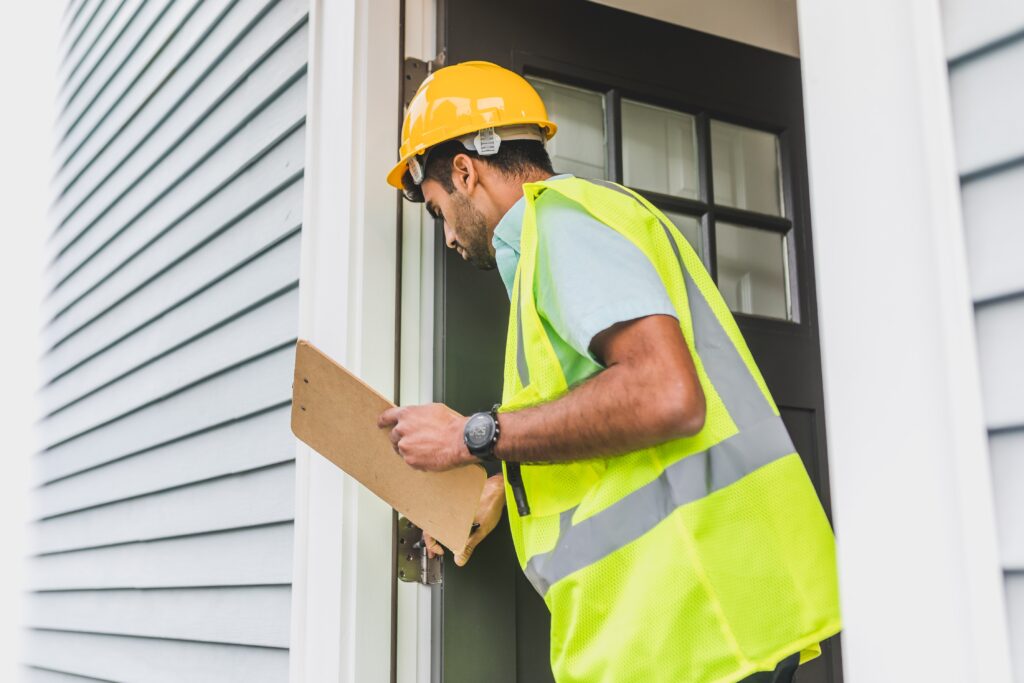
A house survey is one of those costs that feels optional.
Until it isn’t.
Skip one and you could be signing up for thousands of pounds in hidden repairs. Get the wrong type and you’ve either wasted money or missed something serious.
Here’s exactly how much a house survey costs in the UK in 2026, what each level covers, and how to choose the right one for your situation.
Key Takeaways
- House surveys cost between £300 and £1,500+ depending on the type, property value, and location.
- There are three RICS survey levels: Level 1 (from £300), Level 2 (from £400), and Level 3 (from £700).
- A survey is not legally required when buying a property in England and Wales, but skipping one is a gamble.
- A mortgage valuation is not a survey. It protects the lender, not you.
- One in three buyers who commissioned a survey took action that saved them money.
- The buyer pays for the survey. In Scotland, the seller provides a Home Report.
How Much Does a House Survey Cost in 2026?
The short answer: £300 to £1,500+.
The long answer depends on three things:
- Which survey level you choose (Level 1, 2, or 3)
- The value of the property
- Where in the UK the property is located
Here’s a breakdown of typical costs by survey type.
| Survey Type | Typical Cost | Best For |
|---|---|---|
| RICS Level 1 (Condition Report) | £300 – £500 | New-build or modern homes in good condition |
| RICS Level 2 (HomeBuyer Report) | £400 – £1,000 | Standard properties built within the last 150 years |
| RICS Level 3 (Building Survey) | £700 – £1,500+ | Older, larger, extended, or unusual properties |
| Mortgage Valuation (not a survey) | £150 – £400 | Lender’s use only. Does not protect the buyer |
Sources: MyJobQuote (2026), SurveyMatch (2026)
Most buyers in England and Wales opt for a Level 2 survey. It’s the sweet spot between cost and thoroughness for the majority of properties.
Survey Costs by Property Value
Surveyors don’t just charge a flat fee. The price scales with the value of the property you’re buying.
A £150,000 terrace in the North West will cost significantly less to survey than a £750,000 detached house in Surrey.
Here’s what you can expect to pay based on property value.
Level 2 (HomeBuyer Report) by Property Value
| Property Value | Typical Level 2 Cost |
|---|---|
| Up to £250,000 | £400 – £500 |
| £250,000 – £500,000 | £450 – £600 |
| £500,000 – £750,000 | £550 – £700 |
| £750,000 – £1,000,000 | £650 – £850 |
| Over £1,000,000 | £800 – £1,000+ |
Level 3 (Building Survey) by Property Value
| Property Value | Typical Level 3 Cost |
|---|---|
| Up to £250,000 | £700 – £900 |
| £250,000 – £500,000 | £800 – £1,100 |
| £500,000 – £750,000 | £950 – £1,300 |
| £750,000 – £1,000,000 | £1,200 – £1,500 |
| Over £1,000,000 | £1,500+ |
Source: MyJobQuote (2026)
These are national averages. If you’re buying in London or the South East, expect to pay toward the top of each range. If you’re buying in the North West, Yorkshire, or Wales, you’ll typically pay less.
What Are the Three Levels of House Survey?
Since 2021, RICS (the Royal Institution of Chartered Surveyors) has standardised home surveys into three levels. Most surveyors in England and Wales follow this framework.
Level 1: Condition Report
Cost: £300 – £500
This is the most basic survey. It gives you a snapshot of the property’s condition using a simple traffic-light rating system:
- Green: No repair needed
- Amber: Repairs or maintenance required but not urgent
- Red: Serious defects that need immediate attention
A Level 1 survey does not include advice on repairs, cost estimates, or a market valuation.
It’s designed for newer, conventional properties in good condition. Think modern estates, recent new-builds, and standard flats.
Honestly, very few buyers choose a Level 1. For the relatively small extra cost, a Level 2 gives you far more useful information.
Level 2: HomeBuyer Report
Cost: £400 – £1,000
This is the most popular survey in the UK. It includes everything from Level 1, plus:
- More detailed inspection of accessible roof spaces and drainage
- Advice on defects and their potential impact
- Maintenance recommendations
- Optional market valuation (usually a small additional fee)
A Level 2 is suitable for most conventional properties built within the last 150 years that are in reasonable condition and haven’t been heavily altered.
If you’re buying a standard semi-detached, terraced house, or purpose-built flat, this is usually the right choice.
Level 3: Building Survey
Cost: £700 – £1,500+
This is the most comprehensive survey available. It goes deeper than a Level 2 in several important ways:
- Detailed analysis of the building’s construction
- Cause-and-effect explanations for every defect found
- Estimated repair costs and timescales
- Assessment of materials and construction methods
- Recommendations for further specialist investigations
A Level 3 is recommended for:
- Properties built before 1900
- Listed buildings or properties with unusual construction (timber frame, thatched roof, etc.)
- Homes that have been significantly extended or altered
- Properties with visible structural issues
- Large detached houses
- Properties you plan to renovate
Yes, it costs more. But if you’re buying an older property, the Level 3 pays for itself many times over when it catches problems that a Level 2 would miss.
Did You Know?
According to a widely cited 2018 RICS study, home buyers who do not commission an independent survey pay an average of £5,750 in unexpected repairs after purchase.
Source: RICS (2018)
Which Survey Level Do You Need?
Choosing the right survey doesn’t need to be complicated. Here’s a quick guide.
| Your Situation | Recommended Level | Why |
|---|---|---|
| Buying a new-build or modern property | Level 1 or 2 | Lower risk of hidden defects, but worth checking workmanship on new-builds |
| Buying a standard 1930s–1990s house | Level 2 | Good balance of cost and detail for most conventional properties |
| Buying a Victorian or Edwardian property | Level 3 | Older properties have more potential for hidden structural issues |
| Buying a listed building | Level 3 | Specialist construction, restricted repair options, and higher risks |
| Property has been extended or converted | Level 3 | Extensions may hide defects; need to check building regulations compliance |
| Planning major renovation work | Level 3 | You need detailed understanding of the structure before altering it |
If in doubt, go for the Level 2 as a minimum. The difference between a Level 1 and Level 2 is often only £100 to £200, but the extra detail can be worth thousands.
What Does a House Surveyor Actually Look At?
Surveyors inspect the property visually. They don’t drill holes, lift floorboards, or move furniture. But they do look at a lot.
A typical inspection covers:
- External walls: Cracks, bulging, pointing condition, damp penetration
- Roof: Missing tiles, damaged flashing, sagging ridgeline, condition of chimney stacks
- Internal walls and ceilings: Cracking, signs of movement, staining
- Floors: Sloping, bouncing, signs of rot or woodworm
- Windows and doors: Condition, fitting, draft issues
- Electrics and plumbing: Visual inspection only (not testing), noting age and condition
- Damp: Moisture meter readings on internal walls
- Drainage: External drainage inspection (Level 2 and 3)
- Roof space: Insulation, ventilation, structural timbers (if accessible)
- Boundaries and grounds: Retaining walls, trees near foundations, outbuildings
A survey typically takes 2 to 6 hours on site, depending on the size and complexity of the property.
What a Survey Won’t Cover
Surveys have limitations. A standard RICS survey will not:
- Test electrics or gas appliances (you need a separate electrician/Gas Safe engineer)
- Inspect areas that aren’t safely accessible (e.g. a locked loft hatch, areas behind heavy furniture)
- Check for asbestos without laboratory testing
- Investigate drainage below ground (you’d need a CCTV drain survey)
- Provide a pest or timber report (separate specialist needed)
If the surveyor suspects a problem they can’t fully investigate, they’ll recommend a further specialist inspection. This is flagged clearly in the report.
Most Common Problems Found in House Surveys
So what actually shows up?
The most frequently discovered defects in UK property surveys are:
Damp and moisture. The single most common issue. Rising damp, penetrating damp, and condensation all show up regularly. Signs include discolouration, peeling paint, a musty smell, and high moisture meter readings.
Roof defects. Broken or slipped tiles, damaged lead flashing, deteriorating felt, and blocked guttering. Roof repairs can range from a few hundred pounds for minor work to £10,000+ for a full re-roof.
Cracking. Hairline cracks are common and usually harmless. Wider cracks (over 5mm) or diagonal cracking can indicate subsidence or structural movement, which is a serious and expensive problem.
Timber decay and woodworm. Rot in floor joists, window frames, and roof timbers. Active woodworm infestations are less common than they used to be, but historic damage is frequently found in older properties.
Outdated electrics. Old wiring, lack of earthing, no RCD protection. A full rewire on a three-bedroom house typically costs £3,000 to £5,000.
Japanese knotweed. Not common, but when it’s found, it can affect both the property value and your ability to get a mortgage.
Is a House Survey Legally Required?
No.
In England and Wales, there is no legal requirement for a buyer to commission a survey before purchasing a property.
But “not required” doesn’t mean “not needed.”
Your mortgage lender will carry out a mortgage valuation. This tells the bank whether the property is worth what you’re paying. It does not tell you whether the property has damp, structural problems, a failing roof, or dodgy electrics.
A mortgage valuation might take 15 to 30 minutes. Sometimes it’s done remotely, from a desk, using comparable sales data. The surveyor might not even set foot in the property.
You may not even receive a copy of the valuation report. It belongs to the lender, not you.
Important
A mortgage valuation is not a house survey. It protects the lender’s investment, not yours. If you buy a property based solely on a mortgage valuation and then discover £20,000 worth of structural repairs, you have no recourse against the valuer.
What About Scotland?
Scotland works differently.
The seller must commission a Home Report before marketing the property. This includes a survey (equivalent to a Level 2), a valuation, and an Energy Performance Certificate.
A Scottish Home Report typically costs £400 to £900. The seller pays for it and makes it available to all prospective buyers.
As a buyer in Scotland, you receive the Home Report for free. However, you can still commission your own independent survey if you want a more detailed assessment, particularly for older properties where a Level 3 might be warranted.
Who Pays for a House Survey?
In England and Wales, the buyer pays for the survey.
This is one of those costs that catches first-time buyers off guard. You’re already paying for a mortgage arrangement fee, solicitor, searches, and a dozen other things. Then you discover you need to spend another £400 to £1,500 on a survey.
But it’s money well spent.
The survey is for your benefit. You commission it, you receive the report, and you decide what to do with the findings.
If the survey reveals issues, you can:
- Renegotiate the price to reflect the cost of repairs
- Ask the seller to fix the problems before completion
- Walk away from the purchase entirely
- Proceed anyway with full knowledge of what you’re taking on
Did You Know?
Research suggests that around one in three buyers who commissioned a survey took action as a result of the findings, either renegotiating the purchase price or asking the seller to carry out repairs before completion.
Source: RICS
What Factors Affect House Survey Costs?
Six main factors determine how much you’ll pay.
1. Property value. Surveyors price partly based on the value of the property. Higher value means higher fees. A £150,000 flat will cost less to survey than a £600,000 house, even if they’re a similar size.
2. Property size. Bigger properties take longer to inspect. More rooms, more external walls, more roof area. A five-bedroom detached house takes significantly longer than a one-bedroom flat.
3. Property age. Older buildings require more careful assessment. A Georgian townhouse demands more expertise and time than a 2010 new-build.
4. Property type and complexity. Unusual construction methods (timber frame, steel frame, thatched roofs), major extensions, or significant alterations add complexity and cost.
5. Location. Surveyor fees are higher in London and the South East, reflecting higher living costs and property values in those areas. You’ll generally pay less in the Midlands, North, and Wales.
6. Survey level. As we’ve covered, Level 3 costs significantly more than Level 2, which costs more than Level 1. You’re paying for depth of investigation and reporting.
How to Find a Surveyor
Not all surveyors are equal. Here’s what to look for.
Check RICS membership. RICS-registered surveyors are regulated, insured, and follow a professional code of conduct. Use the RICS Find a Surveyor tool to search by location.
Look for local knowledge. A surveyor who knows your area will be familiar with common construction types, local ground conditions, and regional quirks. This matters more than you’d think.
Get multiple quotes. Prices can vary by 30% to 50% for the same property. Get at least two or three quotes before committing.
Ask about turnaround time. Most surveyors take 3 to 10 working days to deliver the report after the inspection. If you’re in a competitive market, ask about faster delivery.
Check what’s included. Some quotes include a market valuation. Others charge extra for it. Confirm exactly what’s in scope before you book.
Can a Survey Save You Money?
Absolutely. And potentially a lot of money.
The most obvious saving is through price renegotiation. If the survey reveals problems, you can go back to the seller and negotiate a reduction.
Significant price reductions after a survey revealing major structural defects can range from 5% to 10% of the purchase price (Wimbledon Surveyors, 2025). On a £300,000 property, that’s £15,000 to £30,000.
Even a modest £5,000 reduction dwarfs the £500 you spent on the survey.
The other saving is avoiding a bad purchase altogether. If the survey reveals subsidence, serious damp, or structural defects that would cost tens of thousands to fix, walking away is the smart move.
A £500 survey that stops you buying a £300,000 house with £40,000 of hidden problems is the best £500 you’ll ever spend.
What If the Survey Finds Nothing?
Then you’ve bought peace of mind. And that has real value.
You’ll complete the purchase confident that you know what you’re buying. No nasty surprises six months in. No sleepless nights wondering about the crack you noticed above the kitchen door.
When Should You Get a Survey Done?
The standard sequence is:
- Have your offer accepted on the property.
- Instruct your solicitor and begin the conveyancing process.
- Commission the survey as soon as possible after the offer is accepted.
- Review the survey report and decide on next steps (proceed, renegotiate, or withdraw).
- Exchange contracts once you’re satisfied with the survey findings and legal searches.
Don’t wait until the last minute. Book the survey early so you have time to deal with any issues before exchange.
Most surveyors can carry out the inspection within one to two weeks of booking, with the report delivered within another 3 to 10 working days.
How to Reduce Your Survey Costs
You can’t avoid the cost entirely, but you can keep it reasonable.
Choose the right level. Don’t pay for a Level 3 on a five-year-old new-build. Equally, don’t scrimp with a Level 1 on a Victorian terrace. Match the survey to the property.
Get multiple quotes. Three quotes from RICS-registered surveyors will give you a realistic price range. Don’t automatically pick the cheapest, but don’t pay over the odds either.
Ask your mortgage broker. Some brokers have relationships with surveying firms and can negotiate a discount.
Combine with the mortgage valuation. Some surveying firms offer a combined product where the surveyor does the mortgage valuation and the home survey in a single visit. This can save £100 to £200.
Use a local surveyor. Local surveyors have lower travel costs, which sometimes translates to lower fees. They also tend to know the local housing stock better.
Important
Never skip a survey to save money. The £400 to £1,000 you save is nothing compared to the £5,750 average that buyers without surveys spend on unexpected repairs after moving in, according to a widely cited RICS study (RICS, 2018).
Specialist Surveys: What Else Might You Need?
Sometimes a general survey flags issues that need further investigation. In those cases, you may need a specialist survey on top of your main RICS survey.
| Specialist Survey | Typical Cost | When You Need It |
|---|---|---|
| Damp survey | £150 – £500 | Surveyor finds signs of damp or high moisture readings |
| Structural engineer’s report | £400 – £800 | Significant cracking, subsidence concerns, or structural movement |
| CCTV drain survey | £150 – £400 | Drainage concerns or older clay pipe systems |
| Electrical inspection (EICR) | £150 – £350 | Outdated wiring or no evidence of recent testing |
| Timber and damp report | £200 – £500 | Signs of woodworm, rot, or beetle infestation |
| Roof survey | £200 – £500 | Surveyor flags roof concerns but cannot fully inspect from ground level |
| Asbestos survey | £150 – £400 | Property built before 2000 with suspected asbestos-containing materials |
Not every property needs specialist surveys. But if your main survey recommends one, take it seriously. The surveyor is flagging it for a reason.
Surveys When Selling: What Sellers Need to Know
If you’re the seller, you don’t arrange or pay for the buyer’s survey. That’s their cost.
But you should know what to expect.
The buyer’s surveyor will visit your property and spend several hours inspecting it. They’ll look in the loft, check the exterior, and take moisture readings on internal walls. You don’t need to be there, but someone needs to provide access.
After the survey, the buyer may come back with one of three responses:
- They proceed as agreed. No issues, or nothing significant enough to worry about.
- They ask for a price reduction. The survey found problems and they want the price adjusted to reflect repair costs.
- They pull out entirely. The survey found something serious enough to put them off.
If you’re selling, it can be worth getting a pre-sale survey yourself. This costs the same as a standard survey but lets you identify and address issues before buyers discover them. It avoids renegotiation ambushes and gives buyers confidence.
How Property Rescue’s Survey Process Works
We handle surveys differently from a traditional buyer.
When you sell to Property Rescue, we commission an independent survey at our own expense. You don’t pay for it.
Here’s the process: you give us a quick call, it takes about 10 minutes, and we’ll have an indicative cash offer back to you within 24 hours. We then send an independent valuation firm to inspect the property and check with a couple of local estate agents for appraisal and value confirmation. The whole valuation process takes about five working days.
We use proprietary technology that analyses the area, recent comparable sales, the last sale price, and thousands of other data points. It’s extremely good at getting the price right before anyone sets foot in the property.
In around 95% of cases, the formal offer after the survey is exactly the same as the indicative offer we gave you on the phone. The only time it changes, in about 5% of cases, is when the surveyor finds something that wasn’t mentioned during the initial call.
By contrast, a traditional buyer’s mortgage valuation can take two to three weeks because surveyors are often backlogged. And a conventional buyer can renegotiate or withdraw at any point based on what their survey finds.
With us, once the offer is confirmed and you accept it, the sale is guaranteed. We don’t pull out because of cosmetic issues or use the survey as a bargaining tool to chip the price down.
Need to Sell Your Property Quickly?
Get a no-obligation cash offer within 24 hours. We pay for the survey and cover your legal fees.
Frequently Asked Questions
How much does a Level 2 house survey cost?
A Level 2 (HomeBuyer Report) typically costs between £400 and £1,000, depending on the property’s value, size, and location. For a standard £300,000 property, expect to pay around £450 to £600. Prices are higher in London and the South East.
How much does a Level 3 building survey cost?
A Level 3 (Building Survey) costs between £700 and £1,500+. For a £300,000 property, you’re looking at £800 to £1,100. For properties over £1 million, expect £1,500 or more. It’s the most thorough survey available and is recommended for older or complex properties.
Is a house survey worth the money?
Yes. Buyers without surveys spend an average of £5,750 on unexpected repairs after purchase (RICS). A survey that costs £500 could save you thousands in hidden defects and give you leverage to renegotiate the price. (RICS figure from 2018; actual costs today may be higher.)
Do I need a survey if my mortgage lender does a valuation?
Yes. A mortgage valuation is not a survey. It’s a brief check (sometimes done remotely) to confirm the property is worth what you’re paying. It does not assess the property’s condition, check for damp, inspect the roof, or identify structural problems. It protects the lender, not you.
Can I use the survey to negotiate the price down?
Yes. If the survey reveals defects, you can go back to the seller and negotiate a price reduction to reflect the cost of repairs. Around one in three buyers who commission a survey end up taking action based on the findings. Larger reductions can range from 5% to 10% of the purchase price where major defects are found.
Who arranges the house survey?
The buyer arranges and pays for the survey in England and Wales. You choose the surveyor, pick the survey level, and commission the work directly. Your solicitor or estate agent may recommend a surveyor, but the choice is yours. In Scotland, the seller must provide a Home Report before marketing the property.
What happens if the survey finds problems?
You have four options: renegotiate the price, ask the seller to fix the problems, proceed with full knowledge of the issues, or walk away from the purchase. No money has changed hands at this point, so you’re free to withdraw without financial penalty (other than the cost of the survey itself and any solicitor fees incurred so far).
How long does a house survey take?
The on-site inspection typically takes 2 to 6 hours depending on the property’s size and the survey level. The report is usually delivered within 3 to 10 working days after the inspection. If time is tight, ask the surveyor about expedited delivery.
Should I get a survey on a new-build?
Yes, even new-builds can have defects. Snagging issues, poor workmanship, and construction defects are surprisingly common. A Level 1 survey is often sufficient for a new-build, but a Level 2 provides more peace of mind. Some buyers opt for a specialist snagging survey instead, which focuses specifically on new-build quality issues.
Do cash buyers need a survey?
Cash buyers aren’t required to get one by a lender, but it’s still strongly advisable. Without a mortgage lender involved, there’s no valuation at all. The survey is the only independent assessment of the property’s condition. Skipping it to save a few hundred pounds is a false economy on a purchase worth hundreds of thousands.
Summary: What You’ll Pay for a House Survey
A house survey is one of the few costs in the property buying process that can genuinely save you money. The right survey on the right property either confirms you’re making a good decision or catches problems before they become your problem.
Match the survey level to your property. Get multiple quotes from RICS-registered surveyors. And whatever you do, don’t confuse a mortgage valuation with a proper survey.
If you’re selling a property and the buyer’s survey has thrown up problems, or if the sale has stalled and you need to move on quickly, Property Rescue can give you a cash offer within 24 hours. We handle the survey ourselves, pay your legal fees, and complete in as little as two to four weeks. Call 020 8634 0224 or get your free cash offer.
Disclaimer
This article is for general information only and does not constitute professional surveying, legal, or financial advice. Survey costs quoted are indicative and based on publicly available data as of 2026. Actual costs may vary depending on your property, location, and chosen surveyor. Always instruct a RICS-registered surveyor for an independent assessment of any property you’re considering buying. If you need advice specific to your situation, consult a qualified professional.